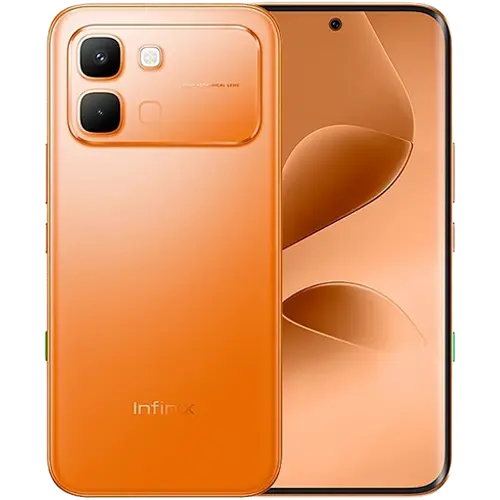
Infinix Note Edge
Score Overview
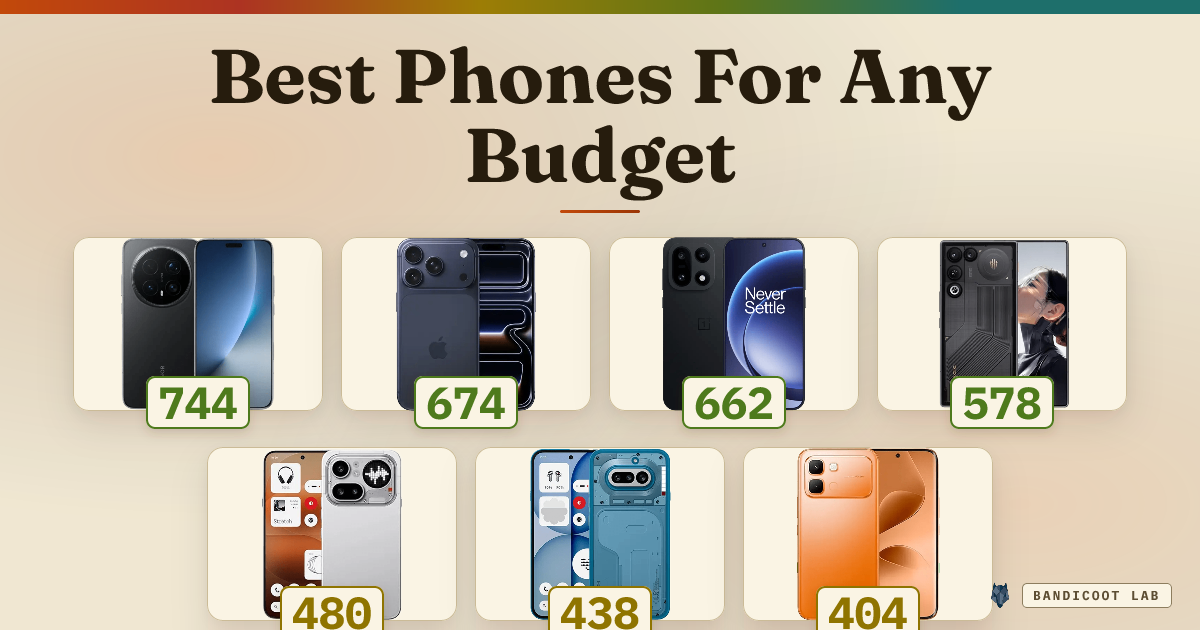
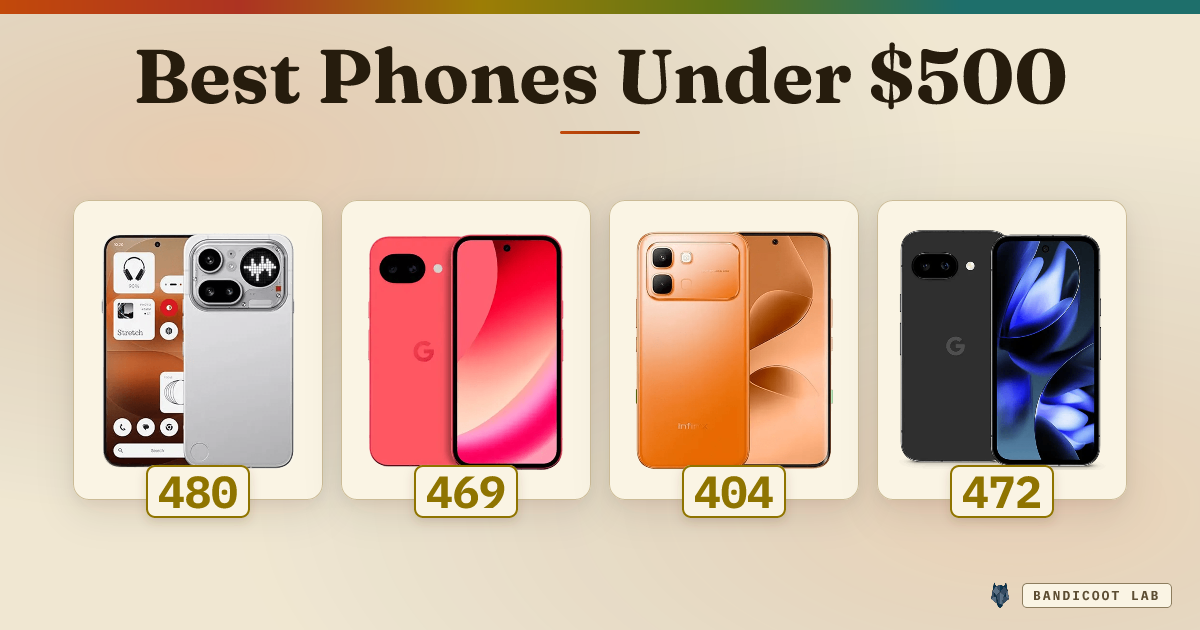
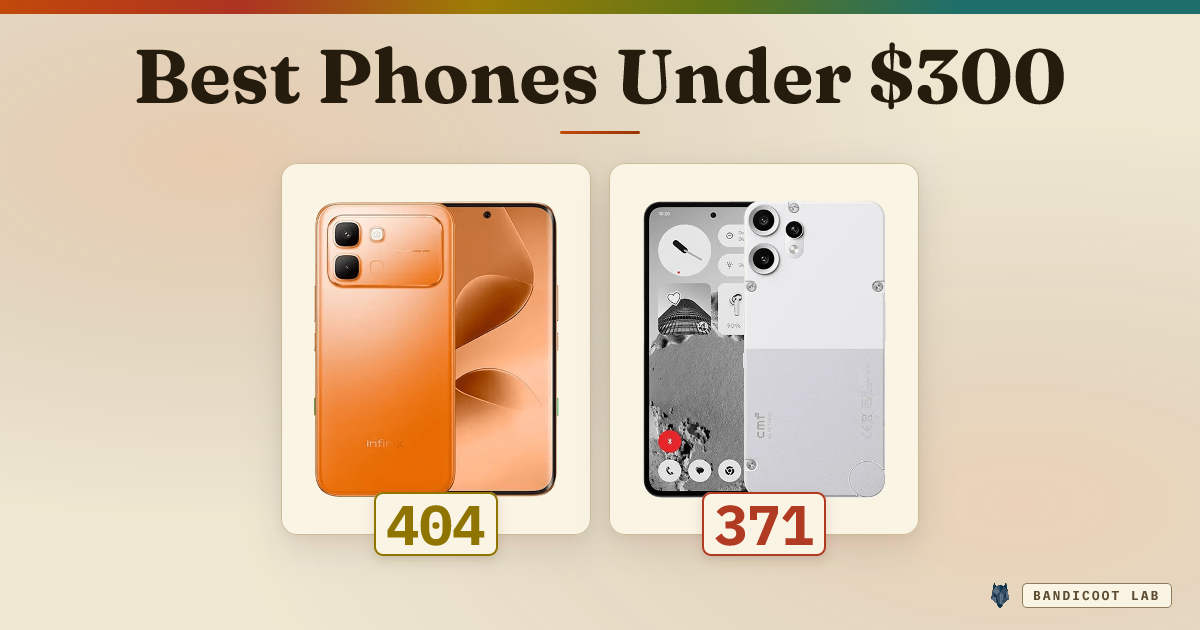
The Infinix Note Edge is a budget smartphone aimed at buyers who want a large AMOLED display and a big battery without spending much. Priced at €170, it competes in a segment where trade-offs are expected.
In practice, the Note Edge actually punches above its weight class. The display is bright for the price and covers a wide color gamut. Battery life during gaming and standby is strong, and charging speed is reasonable for a 45W system. The weak points are significant include video playback endurance, which is poor despite the large 6,500 mAh cell, plus camera quality is below average across the board, processing power is very low, and more.
Design
Specifications
The Infinix Note Edge measures 163.1 x 77.4 x 7.2mm and weighs 190g. The frame and back are plastic, with Gorilla Glass 7i protecting the front. It carries an IP65 rating, meaning it's protected against low-pressure water jets and dust ingress, but it isn't rated for submersion. The display uses a 19.5:9 aspect ratio with a 93.4% screen-to-body ratio, which means bezels are thin relative to the phone's footprint. That’s part of the edge design, with a display that curves around the sides.
At 190g, it's slightly heavier than the Nothing CMF Phone 2 Pro (185g) despite being marginally thinner (7.2mm versus 7.8mm).
Bandicoot Lab does not formally test design or durability. The observations here are based on published specifications.
Display
The Note Edge uses a 6.78-inch AMOLED panel running at up to 120Hz, with a resolution that yields 429 pixels per inch.
Manual brightness tops out at 684 nits, which is good for outdoor visibility at this price and roughly matches the Nothing CMF Phone 2 Pro's 670 nits. The minimum brightness drops to 1.77 nits, fine for nighttime reading. HDR peak brightness reaches 4,248 nits in brief bursts. The display only retains 37.7% of its brightness over large window sizes though, so it’s mostly for HDR highlights, rather than full-screen images. Over a 30-minute HDR session, the panel holds 96.8% of its sustained brightness level, which is good.
Color accuracy is average. The best display mode (Original Color) produces an average Delta E of 3.09, meaning colors deviate a little from their reference values. Most people won't notice this in casual use, but side-by-side with a well-calibrated display the differences would be visible, particularly in skin tones and neutral grays. The worst single-patch error reaches 8.15. Gamut coverage is solid, hitting 100% of sRGB and 100% of Display P3 in the wider Bright-Colored mode, or 97.5% of Display P3 in Original Color mode.
Touch latency averages 24.2ms, which is functional but higher than the CMF Phone 2 Pro's 17.1ms.
Performance
The Note Edge runs a MediaTek Dimensity 7100 paired with 8GB of RAM. This is a low-power chipset, and the benchmarks reflect that.
Geekbench 6 returns 999 single-core and 2,975 multi-core. These are similar to the Nothing CMF Phone 2 Pro's 1,012 and 2,953. General app launches, multitasking, and system navigation will feel slower than anything running a flagship or mid-range chip.
GPU performance is weak. The 3DMark Wild Life Extreme stress test peaks at 700, with 99.6% stability. The phone doesn't throttle because the GPU isn't working hard enough to generate heat. Gaming at high settings in demanding titles will not be smooth. The CMF Phone 2 Pro scores 854, though neither phone is suited to graphically intensive games.
Browser performance (Speedometer 2.1) returns 7.7, which is low enough to make complex web apps and heavy pages feel sluggish.
Camera
The Note Edge has a single 50-megapixel rear camera and a 13-megapixel front camera. There is no ultrawide or telephoto lens. Maximum zoom is 15x.
Overall camera performance is weak. The main lens produces decent sharpness in good light but color accuracy in processed images is poor across all conditions. The front camera is surprisingly competitive in sharpness but struggles with color under most lighting.
Sharpness degrades quickly as zoom increases. At 1x in bright light, the main camera resolves reasonable detail. By 5x, this drops by around half, and by 10x it falls to half of that. At the maximum 15x digital zoom, the device produces images that look soft and lack fine detail. This steep drop-off is expected from a single-lens system with no optical telephoto — any zoom beyond 2-3x is essentially enlarging and interpolating the center of the frame. The CMF Phone 2 Pro, which has a dedicated 2x telephoto lens, maintains much higher sharpness at equivalent zoom levels.
Main
In bright light, the main camera resolves well at 1x and sharpness holds up reasonably in mid-light. Low light drops around a quarter of its detail, which is acceptable.
Color accuracy in auto mode is a clear weakness. In bright light, the average color error (Delta E) is 9.78, with skin tones averaging 12.38. Colors are oversaturated by about 7% and skin tones shift noticeably warm and pink. In mid-light, the camera's auto white balance introduces a strong warm-yellow cast, pushing skin tones further off, with skin tone error reaching 10.48. In low light, overall color error improves to 4.96, but skin tones still drift at 5.44.
In high-contrast scenes, highlights clip and shadow detail compresses. The tonal range is narrower than what the CMF Phone 2 Pro captures from its main sensor.
Video stabilization from the rear camera is functional, with moderate shake.
Front
The 13-megapixel front camera produces good sharpness for a selfie lens. In fact, its detail is better than the CMF Phone 2 Pro's front camera across all lighting conditions.
Color accuracy is poor in auto mode though. Bright-light selfies show an average Delta E of 13.1, with skin tones reaching 16.36. The processing pushes reds and pinks hard, making skin appear significantly warmer and more saturated than reality. In mid-light, a strong warm-yellow bias appears in the white balance, with skin tones still substantially off. Low-light auto results are better, with overall error at 4.76. As with the rear camera, raw captures are more accurate, suggesting the processing pipeline is the primary source of color inaccuracy.
The front camera preserves a wider range of tones from shadows to highlights compared to the rear. Video stabilization is weak, with noticeable residual shake in footage.
Battery
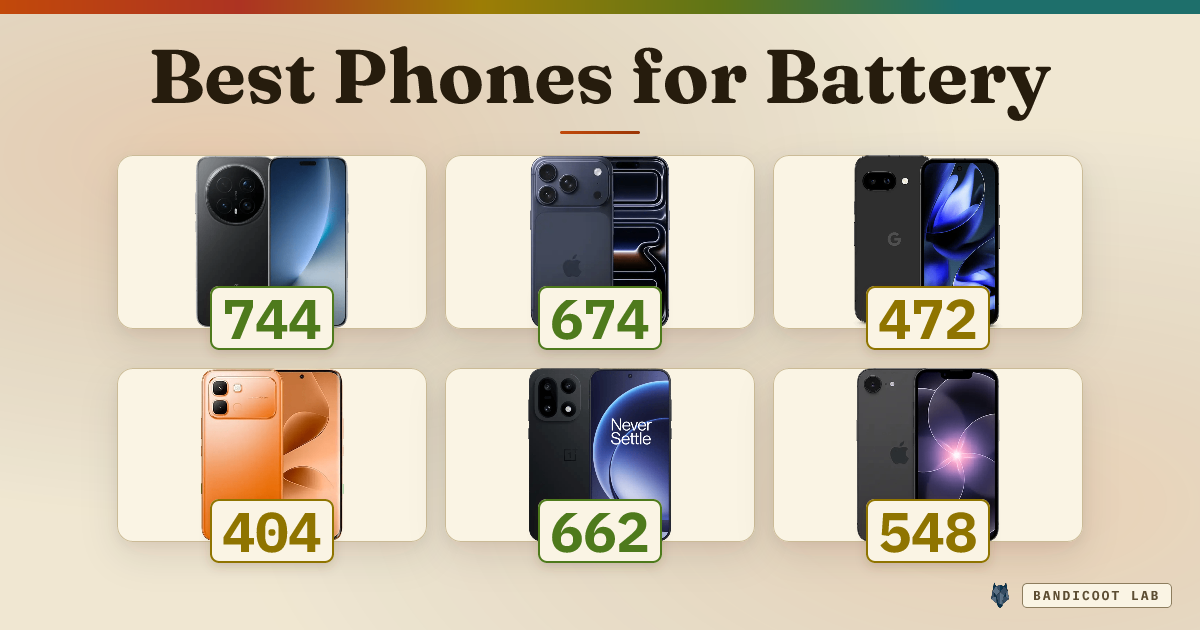
The Note Edge carries a 6,500 mAh battery. Despite the large cell, video playback endurance is poor, sitting at 7.4 hours at maximum brightness. For context, the Nothing CMF Phone 2 Pro lasts 23.6 hours on the same video test with a smaller 5,000 mAh battery. This is a dramatic gap is likely due to the Note Edge struggling to decode the video, rather than an issue with the display panel.
Gaming drain looks good on paper, with only 7% battery lost over the hour — but that’s because the low-power GPU simply doesn’t draw much energy.
Web browsing drain is 22% over five hours, translating to roughly 22-23 hours of continuous browsing, which is reasonable and slightly better than the CMF Phone 2 Pro's 25% drain over the same period.
Standby is excellent at just 1% drain over eight hours overnight. Combined with the large cell, the phone will comfortably last through the night with minimal loss.
Charging
The Note Edge supports 45W wired charging over USB-C. In 10 minutes, it reaches 19% from empty. After 30 minutes, it hits 52%. Given the 6,500 mAh capacity, reaching half charge in half an hour is a reasonable result. The Nothing CMF Phone 2 Pro, with its smaller battery and 33W charger, reaches 50% in 30 minutes, so the Infinix is doing more total work in the same time. There is no wireless charging.
Speaker
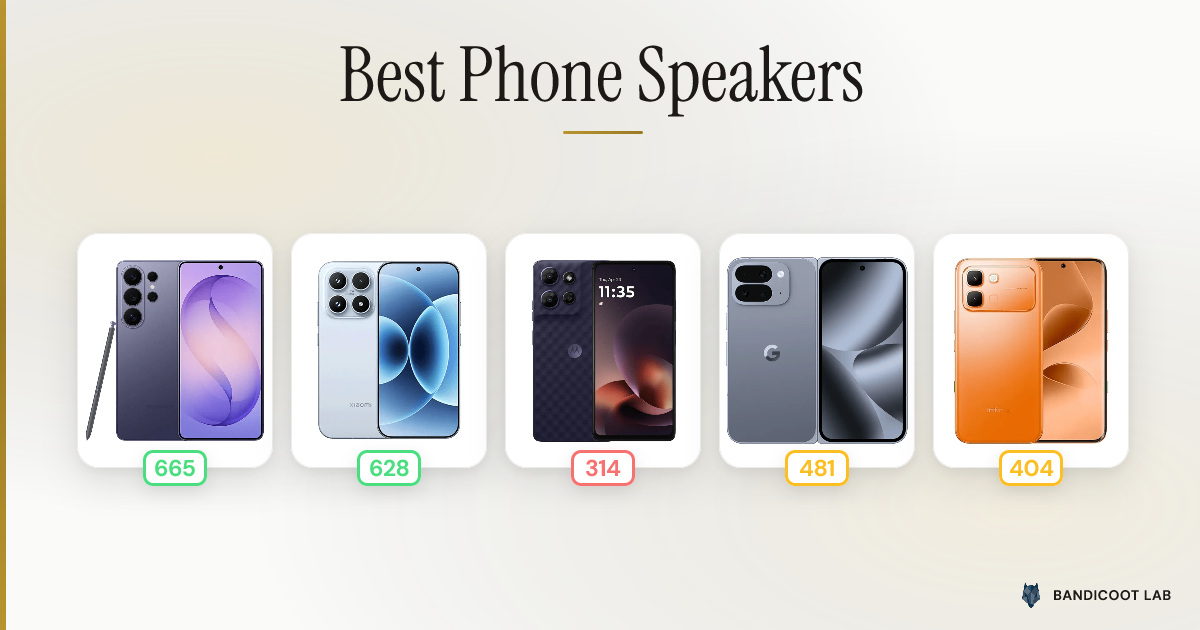
The Note Edge's speaker reaches a maximum of 75.9 dBA, which is loud for this price segment and noticeably louder than the CMF Phone 2 Pro's 68.2 dBA.
Total harmonic distortion averages 6.66%, which is moderate. At high volumes, some harshness will be audible, though it remains within a listenable range for casual use.
The frequency character leans toward the midrange and upper frequencies. Bass response is present but thin — don't expect any real low-end weight from music or movie audio. High-frequency clarity is limited, giving the overall sound a somewhat flat, mids-forward profile.
Microphone
The microphone is one of the weaker aspect of the Note Edge in our testing. The frequency response shows a standard deviation of 11.11, indicating significant unevenness across the frequency range. Voice recordings and calls will sound less natural and balanced than on most competitors. If voice recording quality or call clarity is a priority, this phone will disappoint.
Other
Measurements
Specifications
The Note Edge uses an optical fingerprint sensor with an average unlock speed of 239ms. This is functional but on the slower side. There is no hardware-based face unlock.
Data transfer over the USB-C 2.0 port tops out at 36 MB/s read and 34 MB/s write for large files. These are typical USB 2.0 speeds and mean that transferring large files or backups to a computer will be slow.
Storage is available in 128GB and 256GB configurations, both paired with 8GB of RAM.
Conclusion
The Infinix Note Edge delivers a bright, wide-gamut AMOLED display and strong standby battery life at an unusually low price. The speaker is louder than most competitors, and charging speed is proportionate to the large battery. These are genuine strengths for €170.
The rest of the package reflects the price. Processing power is low, the camera system produces soft images at any real zoom distance and heavily oversaturates colors in auto mode, video playback battery life is unexpectedly poor, and the microphone trails every other device in our testing. Buyers who prioritize screen brightness, standby endurance, and speaker volume over camera quality and performance will find the Note Edge acceptable. Anyone who needs reliable photos, smooth multitasking, or long video playback sessions should look elsewhere, even within this price range.