The Motorola Moto G Power (2026) is a budget Android phone priced at $299.99. It sits at the low end of the smartphone market, competing with devices like the Nothing CMF Phone 2 Pro. For the price, the spec sheet is reasonable. It has a 6.8-inch LCD display, a 5,200 mAh battery, 30W wired charging, a 50 megapixel main camera with an 8-megapixel ultrawide, and an IP68/IP69 dust and water resistance rating. It runs the MediaTek Dimensity 6300 with 8GB of RAM.
The Moto G Power delivers acceptable battery life and a loud speaker for its price, but processing power is limited — this is a low-end chipset, and benchmark results reflect that. The camera system is functional but constrained by heavy-handed color processing and a small main sensor. The LCD display does what it needs to at this price point but lacks the brightness and color range of OLED panels on slightly more expensive devices.
Design
Specifications
The Moto G Power (2026) measures 166.6 x 77.1 x 8.7mm and weighs 208 grams. It uses a plastic frame with Gorilla Glass 7i on the front and a vegan leather back. The 6.8-inch display has a 19.9:9 aspect ratio and an 87.2% screen-to-body ratio. An IP68/IP69 rating covers full dust ingress, fresh-water submersion beyond 1 meter, and high-pressure, high-temperature water jets — a rare combination, especially at this price. Depth and duration are set by Motorola. Bandicoot Lab does not formally test design or durability, so this section is descriptive rather than scored.
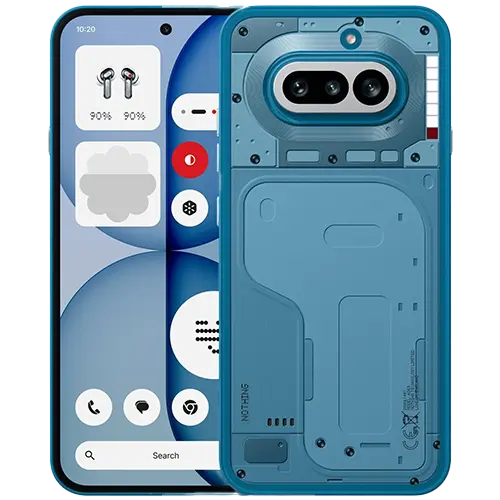
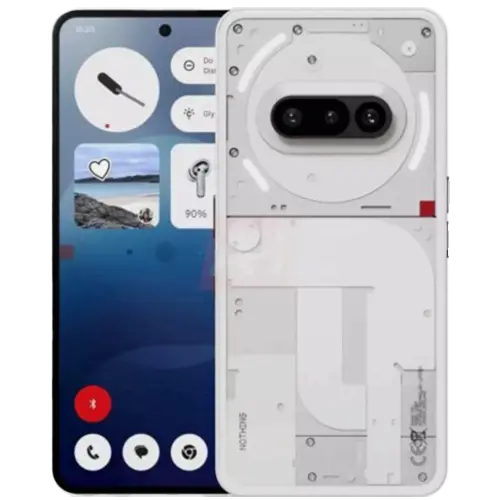
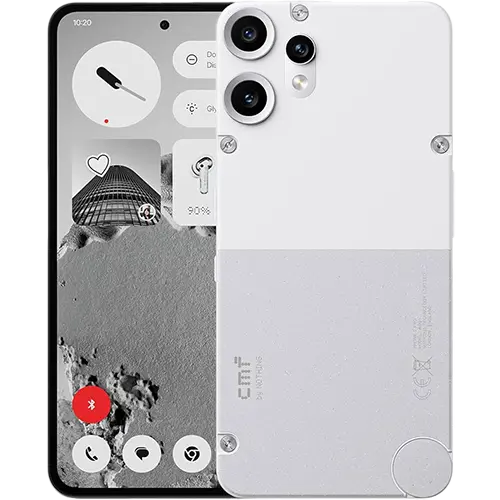
The Moto G Power (2026)'s materials reflect its $299.99 price. A plastic frame is a clear cost-saving choice compared to the aluminum used on most phones in this roundup, but the IP68/IP69 rating is unusual at this price and actually exceeds the standard IP68 rating on most flagships. The Gorilla Glass 7i front is a budget-tier glass rather than the Victus 2 seen on more expensive phones. Same-price rivals like the Nothing CMF Phone 2 Pro at $279 are lighter at 185 grams and thinner at 7.8mm, but carry a lower IP54 rating that only protects against light splashes.
Display
The display is a 6.8-inch LCD panel at 2388 x 1080 resolution (387 pixels per inch), with a 120Hz refresh rate that adapts down to 60Hz. Maximum manual brightness reaches 547 nits, and HDR peak brightness is 1,021 nits — modest figures that will be adequate indoors but limit outdoor visibility in direct sunlight. Brightness stability is 94.5% over 30 minutes. In Natural mode, the best average color error is a Delta E of 2.48. That is an acceptable result for an LCD at this price. The display covers 99.3% of the sRGB color space. Touch latency averages 28.0ms, which is higher than typical OLED-equipped devices but unlikely to bother most users.
Display Gamut Coverage
Sustained Brightness
HDR Brightness
HDR Tone Mapping
Performance
The Moto G Power is powered by the MediaTek Dimensity 6300 with 8GB of RAM. GeekBench 6 scores are 792 single-core and 2,130 multi-core, and Speedometer averages 6.11 — these are low figures that translate to noticeable lag in browser-heavy tasks and app switching. The Nothing CMF Phone 2 Pro hits 1,012 single-core and the Nothing Phone (3a) reaches 1,172. GPU output is minimal — the best Wild Life Extreme loop scored 382, running at roughly 3-4 frames per second. Stability is excellent at 99.2% because the chipset barely generates heat at this output level. Solar Bay ray tracing is not supported on this hardware. AI inference scores are negligible.
Performance Benchmarks
Bars positioned relative to the best score in our database.
Wild Life Extreme Stress Test
Camera
The Moto G Power's camera system includes a 50-megapixel main lens and an 8-megapixel ultrawide, with no telephoto. Sharpness is decent from the main camera but limited on the ultrawide given its low resolution. Color processing applies a very heavy saturation boost across all lenses, and hue accuracy is inconsistent, particularly in low light.
Camera Sharpness
Main Camera
The main camera uses a 50-megapixel sensor (1/2.88") at f/1.8 with a 31mm equivalent focal length — a narrower field of view than the 24-26mm typical of flagship phones. Sharpness is reasonable in bright light but drops in darker conditions. Motorola's processing applies a heavy saturation boost, giving images an artificially vivid look. Hue accuracy is weak across all lighting conditions, not just in dim light — the white balance carries a persistent warm shift even in bright, well-lit environments. In dark conditions, both white balance errors and sensor-level hue confusion contribute to color inaccuracy, with the sensor limitation being the larger factor. Dynamic range is middling.
Color Profile
Dynamic Range
Ultrawide Camera
The ultrawide uses an 8-megapixel sensor at f/2.2 with a 13mm focal length (0.5x). The low resolution limits detail, and the heavy saturation boost present on the main camera carries over here. Hue accuracy is similar to the main lens in bright and mid conditions. In low light, the small sensor struggles significantly — hue errors increase sharply due to sensor limitations. Dynamic range is limited.
Color Profile
Dynamic Range
Front Camera
The front camera uses a 32-megapixel sensor at f/2.2 with a 24mm focal length. Sharpness is decent — the front camera actually resolved more detail than the main camera in our tests. Motorola's saturation boost applies here as well. Color accuracy degrades in low light, where both white balance correction and sensor-level hue confusion contribute — the warm white balance shift is the more prominent factor based on our measurements. Dynamic range is limited.
Color Profile
Dynamic Range
Battery
The Moto G Power has a 5,200 mAh battery. Video playback at 200 nits lasted 17 hours 34 minutes — enough for a full day of media consumption but well below the Nothing CMF Phone 2 Pro's 23 hours 35 minutes and the Nothing Phone (3a)'s 24 hours 44 minutes. Web browsing over five hours consumed 24% of the battery, which is a reasonable result. Gaming drain during the Wild Life Extreme stress test used just 11%, though this reflects the chipset's low power draw rather than efficiency — the GPU is barely being pushed. Standby drain overnight was 3%.
Battery Life
Charging
The Moto G Power supports 30W wired charging, reaching 20% in 10 minutes and 58% in 30 minutes, with a full charge in about 64 minutes. There is no wireless charging. The charging speed is competitive for the price — the Nothing CMF Phone 2 Pro reaches 50% in 30 minutes at a similar wattage, and the Nothing Phone (3a) with its faster charger hits 70% in the same window.
Wired Charging Curve
Speaker
The Moto G Power (2026) had a surprisingly loud speaker. Its maximum volume of 80.3 dBA is higher than plenty of much more expensive phones. The trade-off was the rest of the speaker's performance. Bass extension was limited, with a 28.1 dB drop from the mids to the bass band. The high end rolled off — highs sat at the same level as the mids rather than extending above them. Distortion was high at 12.5%, meaning the speaker gets loud but loses cleanliness at volume.
Speaker Frequency Response
Microphone
The microphone's frequency response shows a standard deviation of 4.85 dB, which is an average result. Recordings will sound reasonably natural.
Microphone Frequency Response
Other
Measurements
Specifications
The fingerprint sensor is capacitive and averages 191.7ms per unlock — perfectly fine but slower than the sub-120ms speeds seen on more expensive devices. There is no facial recognition unlock. USB-C 2.0 data transfer speeds reached a maximum read speed of 37.9 MB/s and maximum write speed of 34.3 MB/s, which is slow — this is a USB 2.0 limitation.
Conclusion
The Moto G Power (2026) is a $300 phone and tests like one. Processing power is limited, the camera's heavy saturation processing undermines color accuracy, and battery life trails budget competitors from Nothing. Its strengths are a loud speaker, IP68/IP69 water resistance — uncommon at this price — a decent display for an LCD, and adequate charging speed. It fills a role for buyers who need a functional, water-resistant smartphone at the lowest possible price, but the Nothing CMF Phone 2 Pro at $279 and Nothing Phone (3a) at $379 both outperform it in most categories.