Xiaomi
17 Ultra
Ranked #8 of 42 devices tested

Score Overview
The Xiaomi 17 Ultra is a flagship camera phone aimed at users who want a versatile, high-end imaging system in a large-screen package. It costs €1,499 and positions itself as the successor to the Xiaomi 15 Ultra at the same price point.
The camera system is the strongest part of this phone. Sharpness across all rear lenses is very good, and the telephoto in particular delivers strong results at extended zoom ranges. Color accuracy from the rear cameras is a clear step above most competitors. Performance is strong on the Snapdragon 8 Elite Gen 5, and data transfer speeds are fast.
Here’s how the Xiaomi 17 Ultra performed in our testing.
Design
Specifications
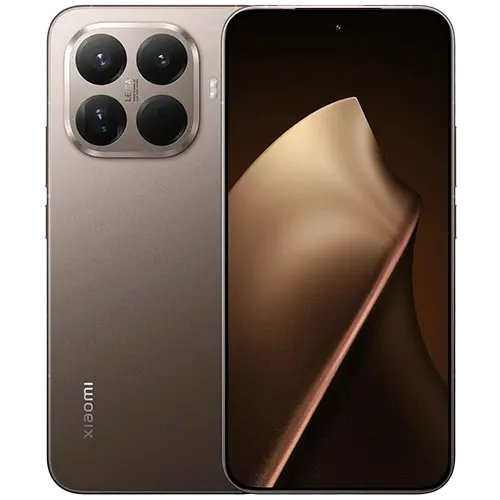
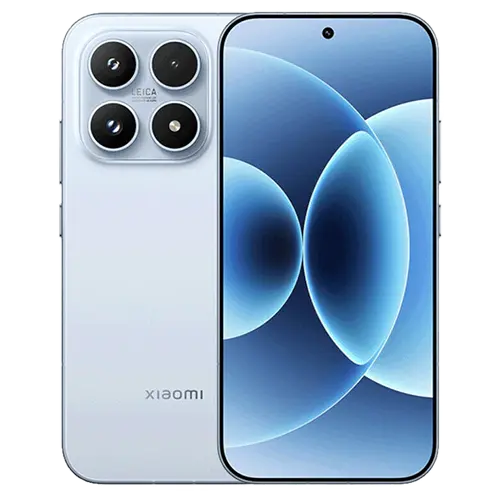
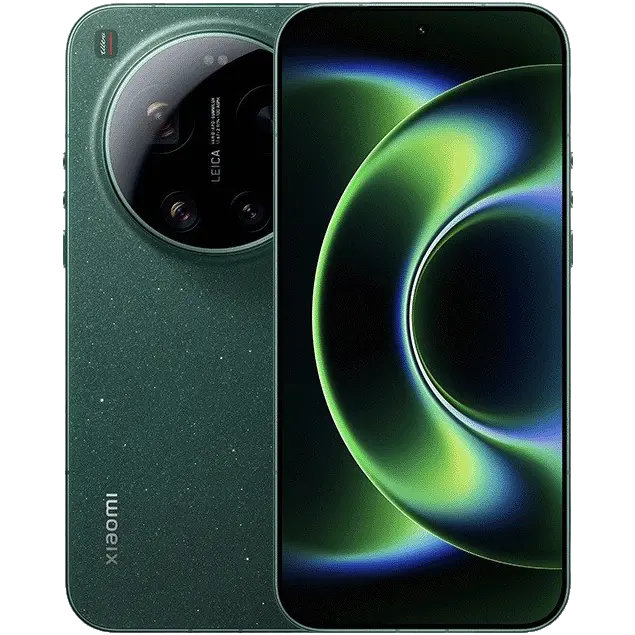
The Xiaomi 17 Ultra measures 162.9 x 77.6 x 8.3mm and weighs 218.4g. It uses an aluminum frame, Xiaomi Shield Glass 3.0 on the front, and a back made of fiber-reinforced plastic or vegan leather depending on the variant. The 6.9-inch display has a 19.6:9 aspect ratio and a 92.1% screen-to-body ratio, meaning bezels are thin all around. It carries an IP68/IP69 rating, which means it is submersible to 1.5 meters for 30 minutes under IP68 and can withstand high-pressure, high-temperature water jets under IP69.
Compared to the Xiaomi 15 Ultra, the 17 Ultra is slightly taller and wider but noticeably thinner at 8.3mm versus 9.4mm. The Samsung Galaxy S26 Ultra is very close in size at 163.6 x 78.1 x 7.9mm and 214g, with a similar aluminum frame but glass on both sides. The Honor Magic8 Pro is more compact at 161.2 x 75mm and nearly the same weight at 219g. The iPhone 17 Pro Max is heavier at 233g despite similar dimensions.
Bandicoot Lab does not formally test design or durability.
Display
The Xiaomi 17 Ultra has a 6.9-inch LTPO AMOLED display running at 1200 x 2608 resolution (416 PPI), with a 1–120Hz adaptive refresh rate. Maximum manual brightness reaches 621 nits, which is low for a flagship. The Honor Magic8 Pro reaches 759 nits manually, the Samsung Galaxy S26 Ultra hits 976 nits, and even the Xiaomi 15 Ultra managed 825 nits. For indoor use, 621 nits is sufficient, but outdoor readability in direct sunlight will suffer compared to brighter competitors. Minimum brightness goes down to 1.2 nits, which is adequate for dark-room use.
HDR peak brightness hits 3,409 nits, and the phone sustained its brightness through our 30-minute test (even, unusually, boosting brightness after a few minutes).
Color accuracy is a weak point. The best mode available, Original Color Pro, achieves an average Delta E of 2.02. This means colors deviate noticeably from their sRGB reference targets. Some individual colors shift to a Delta E above 5, where the difference becomes clearly visible. In Vivid mode, gamut coverage spans nearly 100% of sRGB, 80.7% of Display P3, and 58.1% of Rec. 2020. The Honor Magic8 Pro's Normal mode hits an average Delta E of 0.82, which is functionally perfect color reproduction. The Samsung Galaxy S26 Ultra and Google Pixel 10 Pro XL also deliver more accurate color in their best modes.
Touch latency averages 18.2ms. That is responsive and close to the Honor Magic8 Pro's 17.2ms and the Pixel 10 Pro XL's 15.7ms. The iPhone 17 Pro Max, at 52.4ms, is considerably slower.
Display Gamut Coverage
Sustained Brightness
HDR Brightness
HDR Tone Mapping
Performance
The Xiaomi 17 Ultra runs the Qualcomm Snapdragon 8 Elite Gen 5 with 12GB or 16GB of RAM. Storage options are 512GB and 1TB.
In Geekbench 6, it scores 3,689 single-core and 11,173 multi-core. These are in line with other Snapdragon 8 Elite Gen 5 phones — the Honor Magic8 Pro scores 3,721 and 11,188, and the Samsung Galaxy S26 Ultra scores 3,685 and 11,198. The iPhone 17 Pro Max's Apple A19 Pro leads in single-core at 3,852 but trails in multi-core at 9,872.
GPU performance is strong. The 3DMark Wild Life Extreme stress test produced a peak score of 7,217. The Samsung Galaxy S26 Ultra peaks at 7,802 but drops to 3,882 at its worst with only 49.8% stability. The Xiaomi 17 Ultra maintains 65% stability, with its worst loop at 4,689.
Browser performance (Speedometer) is weak at 24.2, well behind the Honor Magic8 Pro (44.7), Samsung Galaxy S26 Ultra (46.0), and iPhone 17 Pro Max (41.8). This is a significant gap that can affect everyday web responsiveness.
Performance Benchmarks
Bars positioned relative to the best score in our database.
Wild Life Extreme Stress Test
Camera
The Xiaomi 17 Ultra carries a 50-megapixel f/1.7 main camera with a 1-inch sensor, a 50-megapixel f/2.2 ultrawide, and a 200-megapixel f/2.4–3.0 telephoto camera with the ability to physically zoom between 3.2x and 4.3x. On the front, there’s a 50-megapixel camera. Maximum zoom reaches 120x.
Across all rear lenses, sharpness is a genuine strength. The main camera scores well, but the ultrawide and telephoto actually score higher, which is unusual. The telephoto in particular excels, delivering sharp results that hold up well through moderate zoom ranges. At the native zoom in mid and low light, the telephoto produces sharpness levels comparable to the main camera at 1x. Sharpness at 10x remains very high across all lighting conditions. At 20x, results are still strong, outperforming the Samsung Galaxy S26 Ultra and the iPhone 17 Pro Max at the same zoom level. The drop-off begins around 30x, where detail retention remains serviceable, and by 50x, images lose meaningful fine detail but retain usable structure.
At 100x in bright light, detail is minimal but the Xiaomi 17 Ultra holds slight advantages over the Galaxy S26 Ultra and Honor Magic8 Pro. At the maximum 120x, the results are low-detail crops useful primarily for identifying distant subjects rather than producing quality images.
The front camera is the weakest link. Its sharpness falls well below the iPhone 17 Pro Max and Honor Magic8 Pro, and noticeably below the Google Pixel 10 Pro XL.
Camera Sharpness
Main
The 50-megapixel main camera with its 1-inch sensor and f/1.7 aperture captures sharp images across all lighting conditions. In bright light, sharpness is very high and consistent. In mid and low light, results remain strong, with only a slight softening in dark conditions.
Color accuracy in auto mode shows pushed saturation, particularly in bright light where saturation runs about 16% above reference. Skin tones are notably oversaturated in bright conditions. In mid-light, simulating indoor lighting at 4000K, the color shift is more moderate, with a slight warm bias in the yellow direction. This warm shift grows larger in dark conditions, which is primarily a white balance issue. The Xiaomi 17 Ultra's main camera produces more accurate colors in auto mode than the Honor Magic8 Pro or the iPhone 17 Pro Max, both of which show larger overall color errors.
Dynamic range preserves shadow detail well across lighting conditions. Highlights clip in bright areas, which is common across all phones tested. The Samsung Galaxy S26 Ultra's main camera retains more highlight detail, while the Xiaomi 17 Ultra's results are on par with or slightly ahead of the iPhone 17 Pro Max.
Color Profile
Dynamic Range
Ultrawide
The 50-megapixel f/2.2 ultrawide uses a 1/2.76-inch sensor at a 14mm equivalent focal length. Sharpness is very high, among the best ultrawide results in the comparison set. It outperforms the Samsung Galaxy S26 Ultra, iPhone 17 Pro Max, and Honor Magic8 Pro in ultrawide sharpness across lighting conditions.
Color accuracy is strong for an ultrawide. In bright light, saturation is kept close to reference at about 106%, and hue shifts are modest. In dark conditions, a warm yellow bias emerges, consistent with incomplete white balance correction under the warmer test lighting. Overall color errors are lower than the Honor Magic8 Pro's ultrawide and competitive with the Samsung Galaxy S26 Ultra's.
Dynamic range is good, with the auto processing preserving a wide range of tones from shadow to highlight. Highlight clipping occurs but starts further into the bright end of the exposure range compared to most competing ultrawide cameras.
Color Profile
Dynamic Range
Telephoto
The 200-megapixel telephoto camera uses a 1/1.4-inch sensor and can vary between 3.2x and 4.3x optical zoom, which is a unique feature.
Sharpness is excellent at 4x zoom, matching or exceeding the main camera's sharpness in most conditions. At mid and low light, 4x results remain very strong, with only minimal softening.
Color accuracy is good. Saturation runs high in bright light at about 121%, with reds and warm tones pushed most. In mid and dark conditions, the processing is more restrained, and a slight warm bias appears in low light due to white balance. Hue accuracy is moderate in dark conditions, with some color confusion at higher ISO. Overall, the telephoto's color performance is better than the iPhone 17 Pro Max's telephoto and competitive with the Galaxy S26 Ultra's long telephoto.
Dynamic range is narrower than the main or ultrawide cameras, which is expected given telephoto optics. In auto mode, highlights clip relatively early, though shadow detail is adequate.
Color Profile
Dynamic Range
Front
The 50-megapixel f/2.2 front camera uses a 1/2.7-inch sensor. Sharpness is below average compared to competitors. The iPhone 17 Pro Max and Honor Magic8 Pro both resolve considerably more detail in selfies. Results are lower than the Google Pixel 10 Pro XL as well. The Xiaomi 15 Ultra's front camera, despite using a 32-megapixel sensor, produced similar sharpness levels.
Color accuracy is reasonable. Saturation is kept close to reference or slightly below in most conditions, which is unusual. In mid light, a slight pinkish-red bias appears. In dark conditions, a mild warm shift emerges. Overall color performance from the front camera is better than several competitors.
Dynamic range is average. Highlights clip quite aggressively, particularly in high-contrast scenes. Video stabilization from the front camera is decent.
Color Profile
Dynamic Range
Battery
The Xiaomi 17 Ultra has a 6,000mAh battery, up from the Xiaomi 15 Ultra's 5,410mAh. In video playback at 200 nits, it lasted 30 hours and 59 minutes. That is an improvement over the Xiaomi 15 Ultra's 29 hours and 44 minutes, and slightly behind the Samsung Galaxy S26 Ultra's 31 hours and 34 minutes. The Honor Magic8 Pro's 7,100mAh battery lasted 35 hours and 30 minutes, a significant lead.
Web browsing drain is where the battery struggles. Over a 5-hour browsing session, the Xiaomi 17 Ultra lost 26% of its charge. The Honor Magic8 Pro lost only 11%, and the iPhone 17 Pro Max lost 21%. The Samsung Galaxy S26 Ultra lost 24%. Heavy web users will see noticeably shorter battery life from the Xiaomi 17 Ultra than from the Honor Magic8 Pro.
Gaming drain during the 3DMark stress test was 31%, higher than the Honor Magic8 Pro (25%), Samsung Galaxy S26 Ultra (24%), and iPhone 17 Pro Max (25%). The Xiaomi 15 Ultra was worse at 48%, so there is a clear improvement here, but the 17 Ultra still consumes more power under heavy GPU load than similarly priced competitors. Standby drain was 9% over 8 hours, which is poor. The iPhone 17 Pro Max and Pixel 10 Pro XL both lost only 2%, and the Honor Magic8 Pro lost 7%.
In practical terms, video playback endurance means most users will comfortably get through a full day and into a second. The high web and standby drain means heavy, mixed-use days may require a top-up before bed.
Battery Life
Charging
The Xiaomi 17 Ultra supports 90W wired charging and 50W wireless charging. With the wired charger, it reaches 32% in 10 minutes and 77% in 30 minutes. These numbers are essentially identical to the Xiaomi 15 Ultra (33% at 10 minutes, 76% at 30 minutes). The Honor Magic8 Pro's 120W wired charging reaches 81% in 30 minutes. The Samsung Galaxy S26 Ultra reaches 79% in 30 minutes with its 60W charger, which is close despite the lower rated wattage.
Wireless charging hits 19% in 10 minutes and 45% in 30 minutes. This is slower than the Xiaomi 15 Ultra (22% and 54% at the same intervals), despite using the same 50W rating. The Samsung Galaxy S26 Ultra manages 44% in 30 minutes on its 25W wireless charger, nearly matching the Xiaomi 17 Ultra. The Honor Magic8 Pro, despite supporting 80W wireless, only reaches 24% in 30 minutes, suggesting its implementation is more conservative.
Wired Charging Curve
Wireless Charging Curve
Speaker
The Xiaomi 17 Ultra's speakers reach a maximum volume of 71 dB, which is on the quieter side for a flagship. The Honor Magic8 Pro hits 76.9 dB, the Samsung Galaxy S26 Ultra reaches 75.3 dB, and even the Xiaomi 15 Ultra was louder at 72.3 dB.
Average total harmonic distortion is 5.28%, which is reasonable. At higher volumes, the speakers stay clean without noticeable cracking or buzzing. The Samsung Galaxy S26 Ultra is cleaner at 3.26%, but the Xiaomi 17 Ultra is ahead of the Honor Magic8 Pro (8.63%) and iPhone 17 Pro Max (8.90%).
The frequency response leans toward bass. Low-end reproduction is fuller than average, giving music and video audio a richer foundation than phones like the Honor Magic8 Pro. High-frequency clarity is below average, which means vocals and instruments with lots of treble detail can sound somewhat muted. The Xiaomi 15 Ultra had a similar character with even stronger bass emphasis. The Samsung Galaxy S26 Ultra offers a more balanced profile with both strong bass and clear highs.
Speaker Frequency Response
Microphone
Microphone quality is average. The frequency response standard deviation of 4.96 dB indicates moderate unevenness across the audible range, meaning some frequencies are captured louder or softer than others. This is close to the Honor Magic8 Pro (4.99 dB) and the Samsung Galaxy S26 Ultra (5.30 dB). The iPhone 17 Pro Max is notably more even at 3.39 dB. For calls and voice recording, the Xiaomi 17 Ultra's microphone is adequate but not a standout.
Microphone Frequency Response
Other
Measurements
Specifications
The Xiaomi 17 Ultra has an ultrasonic fingerprint sensor that averages 190ms to unlock. That is functional but not fast. The Xiaomi 15 Ultra averaged 150ms, and the Samsung Galaxy S26 Ultra is quicker at 138ms. The phone has no hardware-based face unlock.
Data transfer over USB-C 3.2 Gen 2 is fast. Large file read speeds reach 440 MB/s and write speeds hit 342 MB/s. These are faster speeds than competitors, ahead of the Honor Magic8 Pro (332 MB/s read, 230 MB/s write), Samsung Galaxy S26 Ultra (332 MB/s read, 274 MB/s write), and Xiaomi 15 Ultra (285 MB/s read, 304 MB/s write).
Storage is available in 512GB and 1TB configurations, with 12GB or 16GB of RAM.
Conclusion
The Xiaomi 17 Ultra delivers excellent overall camera performance, with particular strengths in telephoto sharpness, ultrawide detail, and rear camera color accuracy. GPU performance is strong, and data transfer speeds are fast. It improves meaningfully over the Xiaomi 15 Ultra in battery life, gaming efficiency, and processing power.
There are some trade-offs though. The display's color accuracy and manual brightness fall behind the Honor Magic8 Pro and Samsung Galaxy S26 Ultra. Battery life during web browsing and standby is poor for a 6,000mAh phone. The front camera's sharpness lags behind competitors.
At €1,499, buyers who prioritize photography, especially telephoto and zoom work, will find a strong case for this phone. Those who care more about display quality, battery endurance, or overall system polish may find the Honor Magic8 Pro or Samsung Galaxy S26 Ultra more balanced at a similar price.