Honor
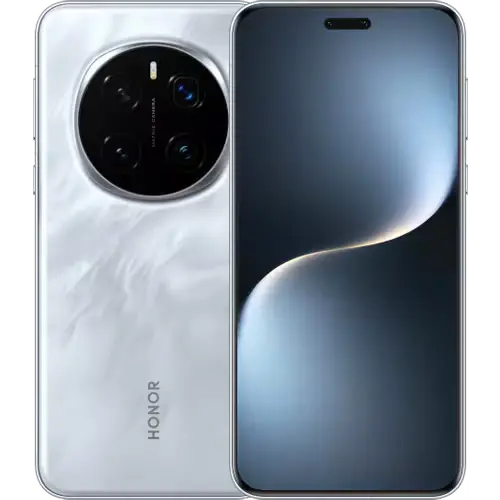
Magic7 Pro
Ranked #2 of 42 devices tested


Score Overview
The Honor Magic7 Pro is a full-featured flagship aimed at buyers who want strong all-around performance without committing to Apple or Samsung ecosystems. It pairs a large 6.8-inch display with a triple-camera system, fast wired and wireless charging, and the Snapdragon 8 Elite chipset. It has been replaced by the Honor Magic8 Pro.
The phone's strongest attributes are its display, which delivers excellent color accuracy and very high brightness, and its charging speed, which is fast on both wired and wireless. Battery life is solid, and the speakers perform well. The camera system is a mixed bag though. The telephoto produces good color, and the front camera is sharp, but overall camera performance sits in the middle of the pack for a phone at this price. Video stabilization is a consistent weak point across all lenses, and the microphone trails most competitors by a wide margin.
Design
Specifications
The Honor Magic7 Pro measures 162.7 x 77.1 x 8.8mm and weighs 223g. It uses an aluminum frame, a NanoCrystal Shield front, and a glass back. It carries both IP68 and IP69 ratings, meaning it can withstand submersion in fresh water and high-pressure, high-temperature water jets. The display has a 19.7:9 aspect ratio with a screen-to-body ratio of 89.9%, which translates to moderately thin bezels but not class-leading for this screen size. The phone connects via USB-C 3.2.
At 223g, the Magic7 Pro sits between the lighter Samsung Galaxy S26 Ultra (214g) and the heavier iPhone 17 Pro Max (233g), both of which have slightly larger displays. Its successor, the Honor Magic8 Pro, trims the footprint down to 161.2 x 75mm and sheds 4g while keeping the same frame material. The dimensions and weight are typical for a 6.8-inch phone and should feel familiar to anyone coming from a similarly sized device.
Bandicoot Lab does not formally test design or durability.
Display
The Magic7 Pro uses a 6.8-inch LTPO OLED panel at 1280 x 2800 resolution, producing a pixel density of 453 PPI. The refresh rate ranges from 1Hz to 120Hz.
Brightness is a genuine strength. Manual brightness tops out at about 831 nits, which is adequate for outdoor visibility. HDR peak brightness reaches approximately 4,773 nits for small highlights, an extremely high figure that puts it well above the iPhone 17 Pro's 3,043 nits and the Samsung Galaxy S26 Ultra's 3,023 nits. When asked to sustain high brightness over extended HDR playback, the panel holds that output at about 99% of peak for the minutes. For small bright highlights, the display can hit its full brightness, but when the entire screen demands sustained brightness, output drops to around 35% of peak. This gap reflects the panel's design — it excels at producing intense highlights for brief moments but cannot maintain that intensity across the entire display long-term. The minimum brightness goes down to around 2 nits, which is comfortable for dark rooms.
Color accuracy is the standout metric. In Normal Mode, the display targets sRGB with an average color error of just 0.7, meaning colors are virtually indistinguishable from their reference values to the human eye. That's tighter than the iPhone 17 Pro's 0.85 in Standard Mode and considerably better than the Samsung Galaxy S26 Ultra's 2.75 in Natural Mode, though the Galaxy S26 Ultra’s number is still reasonable. Normal Mode covers about 99% of sRGB. Vivid Mode extends gamut coverage to 100% sRGB and roughly 84% of Display P3, with a wider average color error of 2.74. Colors in Vivid Mode drift from their reference targets, but it's not extreme.
Touch latency averages 16.5ms, which is fast. The iPhone 17 Pro measures 52.7ms and the Samsung Galaxy S26 Ultra measures 21ms. The Google Pixel 10 Pro XL is the closest at 15.7ms. In practice, the difference between 16.5ms and 21ms is unlikely to be perceptible.
Display Gamut Coverage
Sustained Brightness
HDR Brightness
HDR Tone Mapping
Performance
The Magic7 Pro runs the Qualcomm Snapdragon 8 Elite with 16GB of RAM. 12GB configurations also exist.
In Geekbench 6, the phone scores 3,038 single-core and 8,891 multi-core. Those are solid numbers for the Snapdragon 8 Elite but fall below what the newer Snapdragon 8 Elite Gen 5 delivers in devices like the newer Honor Magic8 Pro and the Samsung Galaxy S26 Ultra. The Apple A19 Pro in the iPhone 17 Pro also pulls ahead. The gap in single-core performance means the Magic7 Pro may feel marginally slower in tasks that lean on a single thread, though most day-to-day usage won't expose this difference.
GPU performance is strong. In the 3DMark Wild Life Extreme stress test, the Magic7 Pro hits a peak score of 6,668 and drops to 4,430 at its lowest loop, yielding 66.4% stability. That peak exceeds the iPhone 17 Pro's 5,865 and the iPhone 17 Pro Max's 5,828, though both Apple devices maintain slightly better stability and run cooler. The Samsung Galaxy S26 Ultra peaks higher at 7,802 but throttles down to 49.8% stability.
Browser performance is a weakness. The Speedometer score of 17.97 is substantially behind the Samsung Galaxy S26 Ultra and the iPhone 17 Pro. This affects web browsing responsiveness and JavaScript-heavy apps. The Magic7 Pro's successor, the Magic8 Pro, jumps to 44.7.
Performance Benchmarks
Bars positioned relative to the best score in our database.
Wild Life Extreme Stress Test
Camera
The Magic7 Pro carries a 50-megapixel main camera (1/1.3" sensor, f/1.4, 24mm), a 50-megapixel ultrawide (1/2.88", f/2.6, 12mm), a 200-megapixel 3x telephoto (1/1.4", f/2.6, 72mm), and a 50-megapixel front camera (1/2.93", f/2.0, 21mm).
Overall camera performance lands in the middle of the pack for a flagship at this price. The telephoto's color accuracy is a genuine highlight, and the front camera delivers strong sharpness. The main weakness is video stabilization, which is poor on every lens. Dynamic range on the main lens is above average, but the ultrawide and telephoto trail behind.
Sharpness at native focal lengths is acceptable but not leading. At 1x in bright light, the main camera resolves decent detail, but not as high as the iPhone 17 Pro Max or the Samsung Galaxy S26 Ultra. The gap narrows somewhat in low light, but it's still behind the iPhone 17 Pro. At extended zoom levels, sharpness degrades substantially, as expected. At 50x and beyond, results fall off sharply, and there’s essentially no detail at 90x and 100x in low light. The Pixel 10 Pro XL maintains usable sharpness deeper into its zoom range.
Camera Sharpness
Main
The main camera resolves good detail in bright light, and holds its detail in lower light reasonably well.
Color accuracy is moderate. In bright light, saturation is pushed to about 120% of reference values, a common approach that makes images look more vivid but shifts colors away from what the eye sees. Skin tones are pushed harder than other colors, especially in bright conditions. In mid-light (simulating warm indoor lighting), overall color error drops and the color rendering becomes more accurate, though a noticeable yellow-warm shift is introduced. In low light, that warm shift persists and intensifies, driven primarily by incomplete white balance correction for the warmer test lighting.
Dynamic range from the main lens is a strong point. The auto mode captures a wide tonal range with good shadow detail and modest highlight compression, allowing high-contrast scenes to retain depth. The processing does show some highlight clipping in bright areas.
Video stabilization is poor though. The main camera's stabilization ratio is substantially worse than the iPhone 17 Pro and the Xiaomi 17 Ultra, resulting in noticeably shakier handheld footage.
Color Profile
Dynamic Range
Ultrawide
The ultrawide resolves good detail in bright lighting, and sharpness holds well across lighting conditions. This is a good result for an ultrawide.
Color accuracy is a weakness on this lens. Saturation is pushed to about 118% in bright light, and in mid and low light, a strong warm-yellow shift becomes the dominant color error. Hue accuracy also degrades significantly in dimmer conditions, with hue shifts roughly doubling from bright to dark. This is primarily a white balance issue rather than a sensor limitation.
Dynamic range from the ultrawide is middling. It preserves a reasonable amount of shadow detail in auto mode but doesn't match the main lens.
Color Profile
Dynamic Range
Telephoto
The 3x telephoto uses a large 200-megapixel, 1/1.4" sensor. Color accuracy is the telephoto's strongest attribute and one of the best results on this phone. In bright light, saturation is pushed to about 143%, which is aggressive but with relatively low hue shift. In mid and dark conditions, colors remain relatively accurate with moderate saturation boost and controlled warm bias. The telephoto's color rendering is more consistent across lighting conditions than the main or ultrawide lenses.
Dynamic range is limited in auto mode, with relatively narrow tonal range and some compression artifacts. Raw dynamic range capability is slightly better than the main lens but still constrained in practical shooting. Video stabilization is weak, similar to the main camera.
Color Profile
Dynamic Range
Front
The 50-megapixel front camera resolves good detail, and maintains its sharpness better in low light than the other cameras on the device.
Color accuracy in bright light follows a pattern similar to other lenses, with saturation pushed to about 118%. In mid and low light, color accuracy improves markedly. Skin tones in particular become much more accurate in lower lighting. The front camera's overall color rendering in mid and dark conditions is better than in bright light, an unusual but welcome behavior.
Dynamic range is the front camera's strongest secondary attribute, with very wide tonal range in auto mode and good shadow detail preservation.
Video stabilization is average, falling behind the iPhone 17 Pro's front camera but not dramatically so.
Color Profile
Dynamic Range
Battery
The Magic7 Pro has a 4,000mAh battery. In video playback at maximum brightness, it lasts about 27 hours and 57 minutes. At a standardized 200-nit brightness, it extends to about 32 hours and 11 minutes. That 200-nit figure is substantially better than the iPhone 17 Pro Max's 23 hours and 58 minutes, and approaches the Samsung Galaxy S26 Ultra's 31 hours and 34 minutes. It does trail its successor, the Magic8 Pro, which stretches to 35 hours and 30 minutes thanks to a much larger 7,100mAh battery.
Web browsing drain is 22% over a five-hour test, which is average. The iPhone 17 Pro loses 17% in the same test, while the Samsung Galaxy S26 Ultra loses 24%. Gaming drain during the 3DMark Wild Life Extreme stress test is 26%, roughly comparable to the iPhone 17 Pro's 24% and the Samsung Galaxy S26 Ultra's 24%. Standby drain is excellent at 2% over eight hours, matching the iPhones and well below the Magic8 Pro's 7%.
In practical terms, the Magic7 Pro should comfortably last a full day of mixed use for most people, with the video playback endurance suggesting enough reserve for heavy media consumption days.
Battery Life
Charging
The Magic7 Pro supports 100W wired charging and 80W wireless charging. On wired, it reaches 27% in 10 minutes and 85% in 30 minutes. Wireless charging is very fast too, hitting 29% in 10 minutes and 80% in 30 minutes.
The wireless charging speed is exceptional. The iPhone 17 Pro manages 24% in 10 minutes and 49% in 30 minutes on its 25W wireless. The Samsung Galaxy S26 Ultra reaches 18% in 10 minutes and 44% in 30 minutes. The Magic7 Pro's wireless charging effectively matches what many phones achieve on wired.
Wired charging is also fast compared to the competition. The 85% in 30 minutes is ahead of the Samsung Galaxy S26 Ultra's 79% and well ahead of the iPhone 17 Pro's 72%. The Magic8 Pro with its 120W wired charging reaches 81% in 30 minutes on a larger battery.
Wired Charging Curve
Wireless Charging Curve
Speaker
The speakers reach a maximum volume of 76.5 dBA, which is loud and close to the top of the range for smartphones. Average total harmonic distortion is 4.6%, meaning the speakers stay reasonably clean even at higher volumes. Distortion is lower than the Pixel 10 Pro XL's 10.1% and the iPhone 17 Pro Max's 8.9%, and close to the iPhone 17 Pro's 4.7%.
The frequency response shows decent bass output for a phone speaker, with a fuller low end than the Pixel 10 Pro XL. High-frequency clarity is present but not the strongest attribute. The overall character is balanced but not particularly rich in treble detail. The Samsung Galaxy S26 Ultra produces cleaner output with better high-frequency response and stronger bass, giving it a more complete sound.
Speaker Frequency Response
Microphone
Microphone quality is a clear weakness. The frequency response shows a standard deviation of 7.63, meaning the microphone's output varies substantially across different frequencies. This is substantially wider than the iPhone 17 Pro Max's 3.39 and the Pixel 10 Pro XL's 4.21. In practice, voice recordings and calls may sound uneven, with some frequencies emphasized and others suppressed. This is a notable shortcoming for a phone at this price.
Microphone Frequency Response
Other
Measurements
Specifications
The Magic7 Pro uses an ultrasonic fingerprint sensor that unlocks in an average of 209.7ms, which is functional but not fast. The Samsung Galaxy S26 Ultra unlocks in 137.5ms, and even the Magic8 Pro improves to 170.9ms. There is no hardware-based face unlock.
Data transfer over USB-C 3.2 yields read speeds of about 327 MB/s and write speeds of about 248 MB/s for large files. That's competitive with the Samsung Galaxy S26 Ultra and the Magic8 Pro, and faster than the Pixel 10 Pro XL.
Storage is available in 256GB, 512GB, and 1TB configurations.
Conclusion
The Honor Magic7 Pro delivers a strong display and fast charging that stand out, backed by solid battery life and capable speakers. Its Snapdragon 8 Elite chipset provides enough GPU power to compete with more expensive flagships, even if browser performance and single-core CPU scores lag behind newer-generation rivals like its own successor, the Magic8 Pro.
The camera system is competent but not a differentiator at this price. Sharpness trails leading flagships like the iPhone 17 Pro and Samsung Galaxy S26 Ultra, and video stabilization is consistently weak. For buyers who prioritize display quality and charging convenience over camera performance and audio recording, the Magic7 Pro offers good value. For those who need strong cameras, the Samsung Galaxy S26 Ultra or Xiaomi 17 Ultra are more capable options at similar prices.
Related
Best Phone Displays
Best Android Phones
Best Phones
Honor
Magic V5
Honor
Magic8 Pro

Samsung
Galaxy S26 Ultra
Apple
iPhone 17 Pro Max

Samsung
Galaxy S25 Ultra

Motorola
Razr Ultra (2025)