Samsung
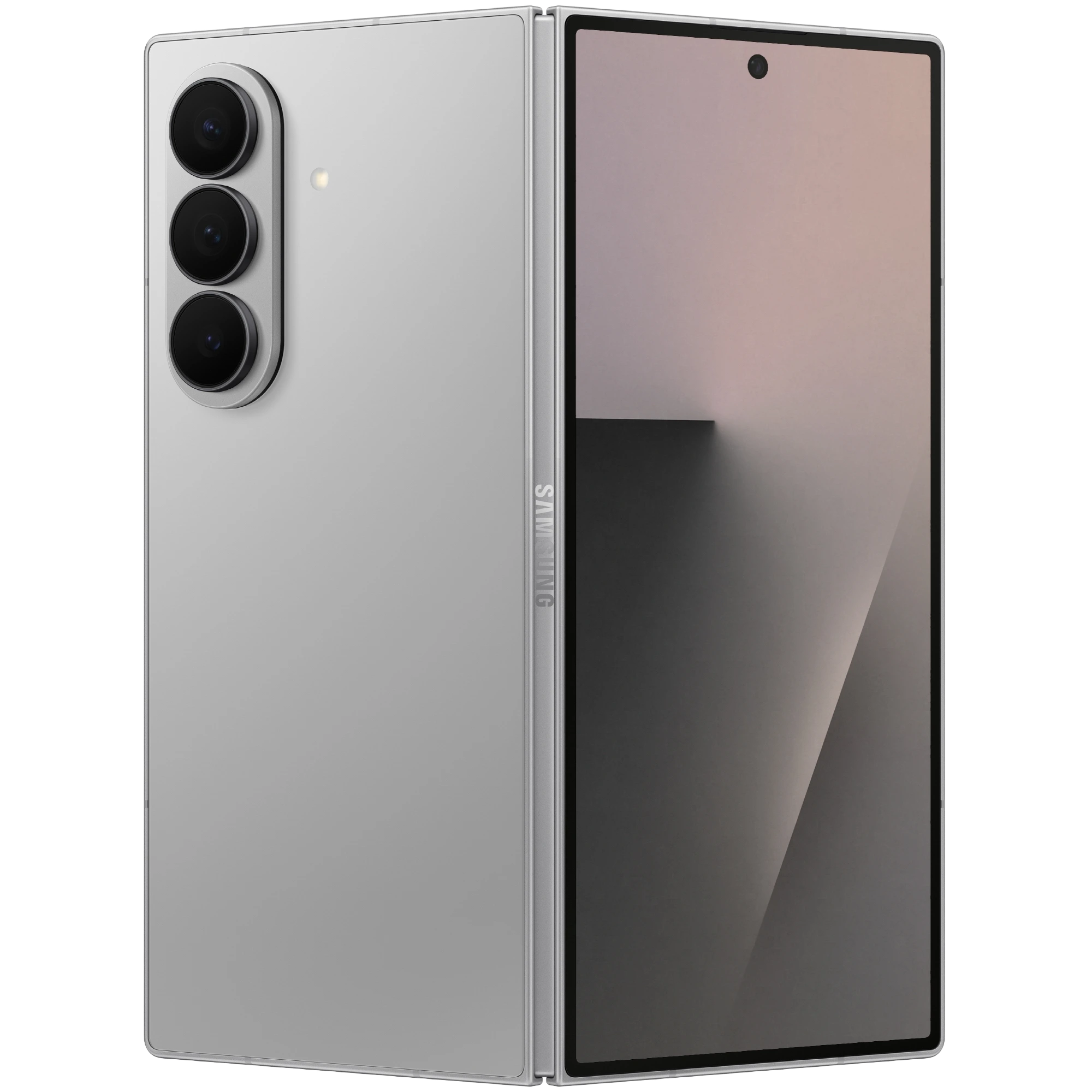
Galaxy Z Fold 7
Ranked #20 of 42 devices tested
Score Overview
The Samsung Galaxy Z Fold 7 is Samsung's book-style foldable, priced at $1,999.99. It pairs a 7.7-inch inner display with a narrower outer screen, runs on the Qualcomm Snapdragon 8 Elite, and carries a 200-megapixel main camera, a 12-megapixel ultrawide, and a 10-megapixel 3.5x telephoto. At 215 grams with an 8.9mm folded profile, it's comparable in weight and thickness to the Honor Magic V5 (217g, 8.8mm), though it carries a smaller 4,400mAh battery than both the Magic V5 (5,820mAh) and Google Pixel 10 Pro Fold (5,015mAh).
The Z Fold 7's strengths are concentrated in biometrics, connectivity, and inner display responsiveness. Its fingerprint sensor is the fastest tested among foldables, and its inner display touch latency is low. Performance is solid but not class-leading for the price. Charging speeds are relatively slow too, while the speaker system lacks bass, and the camera system — while competent — trails purpose-built flagships like the Galaxy S26 Ultra by a meaningful margin.
Design
Specifications
The Galaxy Z Fold 7 measures 158.4 x 72.8 x 8.9mm folded and weighs 215 grams. It uses an aluminum frame with Gorilla Glass Victus Ceramic 2 on the 6.5-inch outer display and the back, and a plastic inner display surface on the 7.7-inch main screen. The inner display has a 9.99:9 aspect ratio and an 83.9% screen-to-body ratio; the outer display has a 21:9 aspect ratio and an 85.6% screen-to-body ratio. An IP48 rating covers submersion in fresh water but offers limited dust protection — only against solid objects 1mm or larger rather than the full dust exclusion of IP68. Depth and duration are set by Samsung. Bandicoot Lab does not formally test design or durability, so this section is descriptive rather than scored.
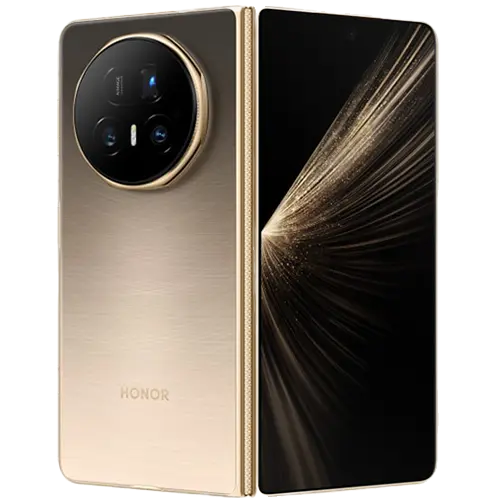
At 215 grams the Z Fold 7 is one of the lightest book-style foldables. The Google Pixel 10 Pro Fold at $1,799 is substantially heavier at 258 grams and thicker at 10.8mm folded, though it compensates with a full IP68 rating rather than the Z Fold 7's IP48. The Honor Magic V5 at the same $1,999.99 price is 217 grams and 8.8mm folded with a 7.95-inch inner display. The Z Fold 7's 6.5-inch outer display is the largest in this comparison set, closer to a standard phone size when folded than the 6.4-inch outer display on the Pixel 10 Pro Fold. The inner display's plastic surface is softer than the outer ceramic glass.
Display
Inner
The inner display is a 7.7-inch Dynamic LTPO AMOLED 2X panel at a 2184 x 1968 resolution (368 PPI), with a 1–120Hz adaptive refresh rate. Manual brightness tops out at 733.87 nits, which is adequate for indoor use but falls short of the Pixel 10 Pro Fold's 1,287.72 nits and the Galaxy S26 Ultra's 975.6 nits. HDR peak brightness reaches 2,757.2 nits, which is strong — slightly above the Pixel 10 Pro Fold's inner panel and well ahead of the Honor Magic V5. Brightness stability is excellent at 98.81%, meaning the panel holds its output under sustained load without dimming meaningfully.
Color accuracy in Natural Mode produces a lowest average Delta E of 2.67 against an sRGB target, meaning colors drift slightly from their true values — most users won't notice in daily use, though it's not as tight as the Pixel 10 Pro Fold's 1.16 or the Honor Magic V5's 1.92. In Vivid Mode, the panel targets Display P3 with 84.25% coverage of that gamut. The inner display's standout metric is touch latency: 8.8ms on average, which is low for a foldable and substantially faster than the Honor Magic V5's 20.5ms and the Pixel 10 Pro Fold's 25.3ms. Users doing fast-paced gaming or stylus work on the inner screen may notice the difference, though the vast majority of users will not.
Display Gamut Coverage
Sustained Brightness
HDR Brightness
HDR Tone Mapping
Outer
The outer display runs at 120Hz with a higher pixel density relative to its size, and its color accuracy is slightly better than the inner panel — an average Delta E of 2.27 in Natural Mode. Vivid Mode covers 84.84% of Display P3. Peak HDR brightness is 2,849.5 nits, marginally higher than the inner display, while manual brightness is a bit lower at 693.51 nits. Brightness stability is nearly identical at 98.89%.
Touch latency on the outer display is 14.7ms, which is still very fast. The outer display scores higher overall than the inner, driven mainly by better color accuracy and slightly higher brightness. Compared to the Honor Magic V5's outer panel, the Z Fold 7's outer screen is dimmer in manual brightness (693.51 vs. 772.79 nits) but peaks higher in HDR (2,849.5 vs. 2,588.4 nits).
Display Gamut Coverage
Sustained Brightness
HDR Brightness
HDR Tone Mapping
Performance
The Galaxy Z Fold 7 runs on the Qualcomm Snapdragon 8 Elite with 16GB of RAM. In Geekbench 6, it posts a single-core score of 3,006 and a multi-core score of 9,818. That single-core result is comparable to the Honor Magic V5's 2,991 (which uses the Snapdragon 8 Elite) but trails the Galaxy S26 Ultra's 3,685 (Snapdragon 8 Elite Gen 5). Multi-core performance shows a similar pattern — the Z Fold 7 beats the Magic V5's 8,877 but falls short of the S26 Ultra's 11,198.
GPU performance in the 3DMark Wild Life Extreme stress test peaks at 6,615 with a stability of 48.1% — meaning the score drops to 3,179 by the worst loop as the device throttles under sustained load. That peak is competitive with the Magic V5's 6,367, but the Magic V5 maintains better stability at 58.6%. The S26 Ultra's peak of 7,802 is meaningfully higher.
Browser performance via Speedometer scored 32.3, which is a notable gap above the Magic V5's 17.0 and the Pixel 10 Pro Fold's 20.3, and closer to the S26 Ultra's 46.0. Day-to-day app performance will feel fast — the throttling under sustained GPU load is more relevant for extended gaming sessions.
Performance Benchmarks
Bars positioned relative to the best score in our database.
Wild Life Extreme Stress Test
Camera
The Z Fold 7 boasts a 200-megapixel f/1.7 main camera with a 1/1.3-inch sensor, a 12-megapixel f/2.2 ultrawide, a 10-megapixel f/2.4 telephoto at 3.5x optical zoom, and two 10-megapixel f/2.2 selfie cameras (inner and outer). The main camera is the clear standout, delivering strong sharpness across all lighting conditions. The ultrawide holds up well in sharpness too. The telephoto and selfie cameras are more middling. They’re serviceable but not competitive with what you get from non-foldable flagships at lower prices.
Overall camera performance falls below average. The main lens is strong, but the supporting lenses and color processing pull the composite score down. Dynamic range on the main and ultrawide is good — the telephoto and selfie cameras are weaker. Color accuracy is a mixed bag across the system — Samsung's processing pushes vivid, saturated output in auto mode, which lifts skin tones and warm hues noticeably from their true values.
Camera Sharpness
Main
The main camera delivers excellent sharpness in bright light and holds up well as conditions darken. In mid-light, detail retention stays high with minimal overshoot from sharpening. Low-light sharpness drops as expected but remains above average. Raw files show clean, unsharpened output with good detail preservation.
Color accuracy in auto mode shows Samsung's characteristic vivid processing. In bright light, saturation is boosted a fair bit, and skin tones drift substantially from their true values. Hue accuracy in bright conditions is reasonable, with hue angles staying relatively close to their reference values. In mid-light (100 lux, 4000K), the processing doesn’t fully correct for the warmer ambient light, and the resulting images carry a warm tint. In dark conditions (10 lux, 3000K), the the sensor is struggles to resolve hues accurately at higher ISO — the camera corrects for the warm ambient temperature but introduces hue confusion from noise. Raw files in bright are quite good, confirming that the sensor captures accurately and the visible drift in auto mode is processing-driven.
Dynamic range from the main camera is good, with the auto mode capturing a wide usable range.
Color Profile
Dynamic Range
Ultrawide
The 12-megapixel ultrawide performs above its specs suggest. Sharpness is strong across conditions — in bright light it nearly matches the main camera, which is unusual for a foldable's ultrawide. Mid-light and low-light sharpness drops gradually rather than falling off a cliff.
Color processing on the ultrawide is slightly more restrained than the main lens in bright light. Skin tones still drift from reference values but less than the main camera. In mid-light, the system again doesn’t completely implement white balance correction for the warmer test illuminant. In low light, the sensor struggles with less light, while white balance correction works a little better.
Dynamic range matches the main camera in auto mode, with similar highlight clipping behavior. This is a solid ultrawide camera.
Color Profile
Dynamic Range
Telephoto
The 10-megapixel f/2.4 telephoto provides 3x optical zoom. The small 1/3.94-inch sensor limits what it can do compared to other telephoto setups on devices like the Galaxy S26 Ultra (which carries both a 3x and 5x telephoto). Sharpness in bright light is decent, and mid-light performance holds up reasonably, though it falls behind the main lens by a noticeable margin. Video stabilization on the telephoto is good.
Color accuracy follows the same pattern as the other lenses — punchy, saturated output in bright light with good hue accuracy. In dark conditions, hue shifts increase dramatically while the b_bias turns negative, suggesting the camera is overcorrecting white balance in the warm test illuminant while the sensor simultaneously struggles to resolve hues. The telephoto's dynamic range is limited though — in bright-light, the lens failed to produce usable tonal steps, indicating the processing pipeline may be over-aggressive with its tone mapping on this particular lens. Raw files show normal dynamic range, confirming this is a processing issue rather than a hardware limitation.
Color Profile
Dynamic Range
Front Inner
The 10-megapixel front camera on the inner screen is the weakest camera in the system. Sharpness in bright light is reasonable for a selfie camera, but low-light sharpness drops noticeably and sharpening overshoot increases significantly.
Color accuracy is poor across conditions. In bright light, skin tones deviate from reference values with oversaturated processing. Mid-light produces similar skin tone errors. In dark conditions, hue accuracy degrades sharply. Dynamic range is limited, with highlights clipping aggressively. This camera is adequate for video calls but not suited for content creation.
Color Profile
Dynamic Range
Front Outer
The outer selfie camera shares the same 10-megapixel f/2.2 specs. Sharpness is slightly better than the inner front camera in bright light, and it holds up better in low light.
Color accuracy shows similar characteristics to the inner front camera, with oversaturated skin tones in bright light. In mid-light, skin tones continue to drift, and in low light hue accuracy degrades significantly due to a mix of sensor-level hue confusion and slight overcorrection of the warm test illuminant. Dynamic range is limited, with highlights clipping at a high EV value in auto mode.
Color Profile
Dynamic Range
Battery
The Z Fold 7 has a 4,400mAh battery, which is small relative to competitors. The Honor Magic V5 boasts a 5,820mAh battery, while the Pixel 10 Pro Fold has 5,015mAh battery and the Galaxy S26 Ultra has 5,000mAh.
Video playback on the outer display at 200 nits runs for 28 hours and 7 minutes, while on the inner display, that drops to 22 hours and 34 minutes. The inner display's larger area and higher total pixel count draw more power, which is expected. The Honor Magic V5 outlasts both though, at 31 hours 46 minutes on its outer display.
Web browsing drain over 5 hours using the inner display consumed 34% of the battery, which is high — the Galaxy Z Flip 7 used only 23% over the same period, and the Galaxy S26 Ultra used 24%. Gaming drain during the stress test was 23%, identical to the Honor Magic V5 and close to the S26 Ultra's 24%. Standby drain over 8 hours was just 2%, which is excellent and matches both the Magic V5 and Pixel 10 Pro Fold.
In practice, the Z Fold 7 will get most users through a full day of mixed use, but heavy inner-display usage will push it closer to needing an evening charge. Users coming from slab phones with 5,000+ mAh batteries will notice the smaller capacity.
Battery Life
Charging
The Z Fold 7 supports 25W wired charging and 15W wireless charging. Wired charging reaches 19% in 10 minutes and 53% in 30 minutes. Wireless charging manages just 7% in 10 minutes and 20% in 30 minutes.
These are slow numbers by any standard. The Honor Magic V5, with 66W wired charging, hits 79% in 30 minutes — nearly 50% more charge in the same time. Even the Galaxy Z Flip 7, with the same 25W charger, edges slightly ahead at 55% in 30 minutes due to its smaller battery. Wireless charging is particularly sluggish — the Magic V5's 50W wireless gets to 48% in 30 minutes versus the Z Fold 7's 20%.
Wired Charging Curve
Wireless Charging Curve
Speaker
The Galaxy Z Fold 7's speaker was competitive for a foldable. Bass extension was limited with a 24 dB drop from the mids to the bass band, similar to the Honor Magic V5's 22.7 dB. The high end was clear and reasonably extended. Loudness of 76.6 dBA was the highest among similarly-priced foldables, beating the OnePlus Open's 73.6 dBA and Honor Magic V5's 70.1 dBA. Distortion of 5.8% was moderate, cleaner than the Pixel 10 Pro Fold's 7.8%.
Speaker Frequency Response
Microphone
The Z Fold 7's microphone produces slightly below-average results. It’s a little more refined than the Honor Magic V5 but not as neutral as the Pixel 10 Pro Fold. Call quality and voice recording will be fine for most purposes, but it doesn't stand out.
Microphone Frequency Response
Other
Measurements
Specifications
The Z Fold 7's side-mounted capacitive fingerprint sensor averages 111.1ms to unlock, which is very fast. The Honor Magic V5 is close, and both are far faster than the Google Pixel 10 Pro Fold.
Data transfer over USB-C 3.2 delivers a max read speed of 275.71 MB/s and a max write speed of 260.41 MB/s. That's competitive with the Honor Magic V5 and close to the Galaxy S26 Ultra. The Pixel 10 Pro Fold is far slower.
Conclusion
The Galaxy Z Fold 7 is a capable foldable that excels in a few specific areas, while carrying notable compromises in charging speed, speaker quality, and battery capacity. The 200-megapixel main camera produces sharp, detailed images, but the supporting cameras and Samsung's heavily saturated color processing keep the overall camera system from matching what you'd get from the Galaxy S26 Ultra at $700 less. Performance from the Snapdragon 8 Elite is good for daily use, though GPU-intensive tasks reveal thermal throttling that cuts sustained output roughly in half.
The Honor Magic V5 presents the most direct comparison at the same price. It charges far faster, has a larger battery, delivers better speaker quality, and matches or beats the Z Fold 7 in most camera metrics. The Z Fold 7 counters with faster biometrics, a significantly more responsive inner display, better browser performance, and superior data transfer speeds. The Pixel 10 Pro Fold, at $200 less, offers IP68 water resistance and better color-accurate displays, but trails in performance and biometric speed. For buyers committed to Samsung's foldable ecosystem, the Z Fold 7 is a competent device — but at $2,000, the compromises in charging, battery, and speakers are difficult to overlook when the competition offers more balanced packages.
Related
Best Samsung Phones
Best-Performing Phones

Samsung
Galaxy S26 Ultra
Samsung
Galaxy S26
Samsung
Galaxy S26+
Samsung
Galaxy S25 Edge

Samsung
Galaxy Z Flip 7
Honor