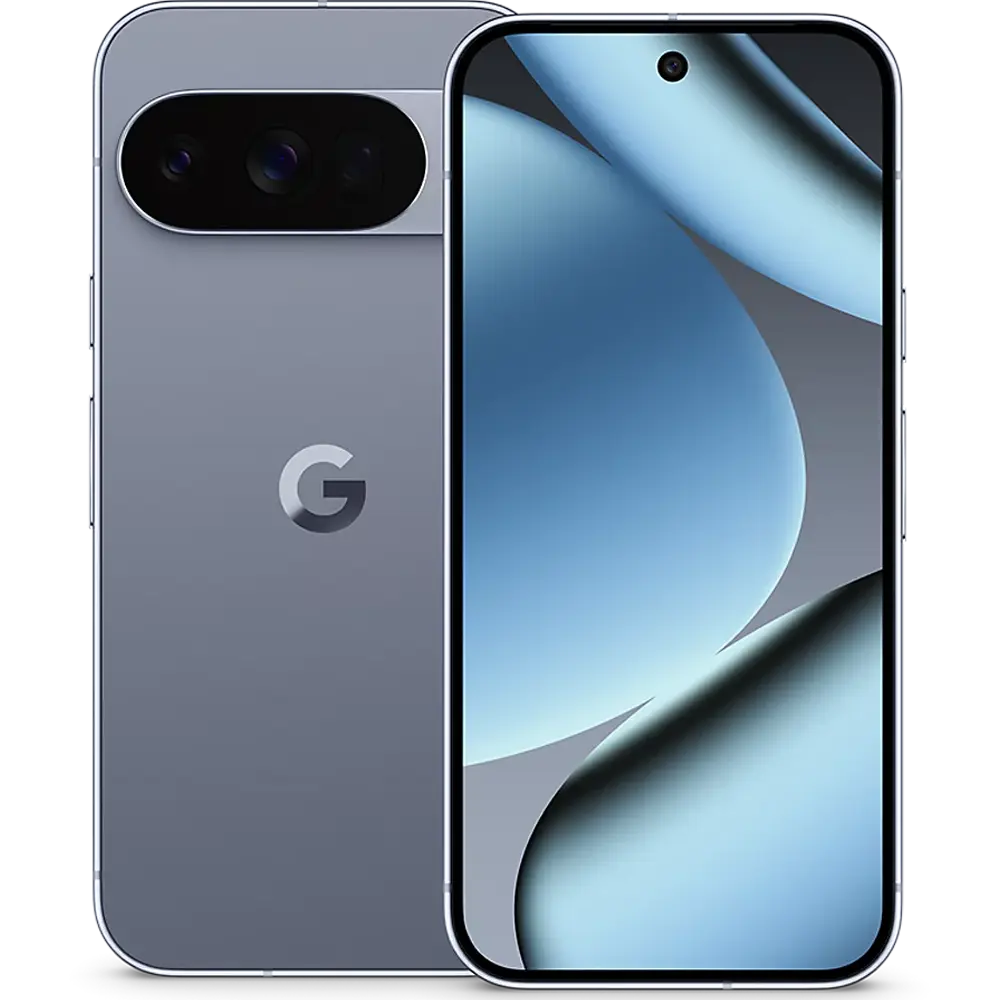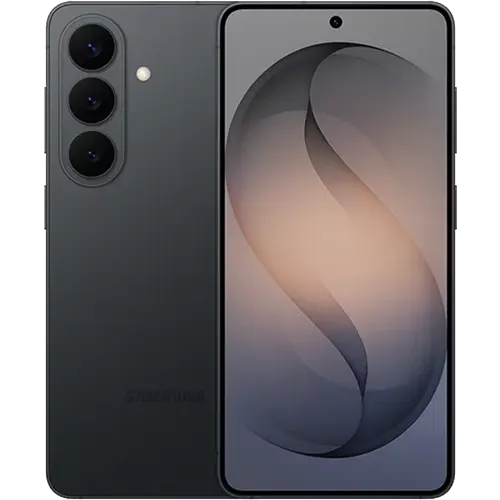
The Samsung Galaxy S26 is the base model in Samsung's 2026 lineup, priced at $899.99. The device follows a long line of well-loved Galaxy devices, and while it doesn’t dramatically change much compared to the previous-generation Galaxy S25, it still boasts a next-gen processor, slightly larger battery, and more.
The S26 performs well in processing power, connectivity, microphone quality, and speaker output. Its camera system scores above average, with particular strength in color accuracy on the telephoto and strong dynamic range across the rear lenses. Battery life improves over the S25, too. The weak points are display quality — color accuracy is below average, and manual brightness is limited.
Design
Specifications
The Galaxy S26 measures 149.6 x 71.7 x 7.2mm and weighs 167 grams. It uses an aluminum frame with Gorilla Glass Victus 2 on both the front and the back. The 6.3-inch display has a 19.5:9 aspect ratio and a 90.8% screen-to-body ratio. An IP68 rating covers full dust ingress and fresh-water submersion beyond 1 meter, with depth and duration set by Samsung. Bandicoot Lab does not formally test design or durability, so this section is descriptive rather than scored.
At 167 grams and 7.2mm thick, the Galaxy S26 is the lightest and thinnest non-foldable flagship in this price range. The iPhone 17 at $799 is 10 grams heavier at 177 grams and 8mm thick despite sharing a 6.3-inch display size. The Pixel 10 at $799 is substantially heavier at 204 grams and 8.6mm thick. Within Samsung's lineup the S26 grows from the Galaxy S25 (162 grams, 6.2-inch display) with a larger panel and slightly more weight, while sitting well below the Galaxy S26+ (190 grams, 6.7-inch display) and Galaxy S26 Ultra (214 grams, 6.9-inch display).
Display
The Galaxy S26 uses a 6.3-inch Dynamic LTPO AMOLED 2X panel at 1080 x 2340 resolution (411 PPI), with a variable refresh rate from 1 to 120Hz. It supports two color modes: Vivid and Natural.
Manual brightness tops out at 640.51 nits, which is low. The Galaxy S25 managed 684.59 nits, the iPhone 17 reaches 853.71 nits, and the Google Pixel 10 pushes to 1,495.84 nits — more than double the S26. Outdoor legibility in direct sunlight will be noticeably worse than these competitors in manual mode. Minimum brightness drops to 0.86 nits, which is good for dark room use. Brightness stability is excellent at 98.73%, meaning the panel holds its brightness level consistently over time rather than dimming under sustained load.
HDR peak brightness reaches 2,791.1 nits, which is competitive with the iPhone 17's 3,022.3 nits and the Pixel 10's 3,089.1 nits. HDR stability sits at 51.7% — meaning that the panel drops brightness to almost half its peak at larger window sizes.
Color accuracy is a weakness. The best-performing mode is Natural, which targets sRGB and achieves an average Delta E of 3.28 — meaning colors drift from their reference values across the test palette. The Galaxy S25's Natural mode measured 3.11, and the iPhone 17 reached 1.77 in its only display mode. The Pixel 10's Natural mode hit 1.44. On both Samsung devices, there's visible inaccuracy that discerning users will notice, particularly in skin tones and neutral grays. Vivid mode covers 83.48% of Display P3 and 100% of sRGB, but color accuracy worsens.
Touch latency averages 21.8ms. The Galaxy S25 measured 14.5ms and the OnePlus 15 hit 15.5ms, both faster, though the practical difference between these figures is unlikely to be perceptible.
Display Gamut Coverage
Sustained Brightness
HDR Brightness
HDR Tone Mapping
Performance
The Galaxy S26 runs the Qualcomm Snapdragon 8 Elite Gen 5 with 12GB of RAM. This is the same chipset found in the OnePlus 15 and the Galaxy S26 Ultra.
In Geekbench 6, the S26 scores 3,709 single-core and 11,232 multi-core. That's a meaningful jump over the Galaxy S25, and it sits close to the OnePlus 15 and much more expensive Galaxy S26 Ultra. The iPhone 17 posts 3,772 single-core but only 9,645 multi-core, so the S26 trades a slight single-core deficit for a substantial multi-core advantage.
GPU performance in the 3DMark Wild Life Extreme stress test peaks at 7,740, which is in line with the Galaxy S26 Ultra's 7,802 and above the OnePlus 15's 7,160. The iPhone 17 peaks lower at 5,164. Thermal throttling is aggressive, though — stability drops to 45.8%, with the worst loop falling to 3,548 and the device reaching 46.2°C. The Galaxy S25 showed similar behavior at 44.4% stability. The OnePlus 15 manages 63.7% stability on the same chipset, suggesting Samsung's thermal design in this smaller body constrains sustained GPU output. Long gaming sessions will see noticeable frame rate drops after the first few minutes.
Performance Benchmarks
Bars positioned relative to the best score in our database.
Wild Life Extreme Stress Test
Camera
The Galaxy S26 carries the same camera hardware as its predecessor — a 50-megapixel f/1.8 main camera with a 1/1.56-inch sensor, a 12-megapixel f/2.2 ultrawide (0.6x), a 10-megapixel f/2.4 telephoto at 3x optical zoom, and a 12-megapixel f/2.2 front camera. Maximum digital zoom is 30x.
Overall camera performance is quite good, with the system's strengths lying in dynamic range across the rear lenses and solid color accuracy — particularly from the telephoto. Sharpness is good from the main and ultrawide lenses, though the telephoto and front camera are more modest. Compared to the iPhone 17, which lacks a telephoto entirely, the S26 offers more versatility. The OnePlus 15 at the same price brings higher-resolution sensors on its ultrawide and telephoto, but its color accuracy scores lower overall. The Pixel 10, also at $799, has a 5x telephoto with a smaller sensor but competitive processing.
Sharpness is strong from the main lens, which resolves well in bright and mid-light conditions with moderate processing. The ultrawide posts high sharpness scores too, and the telephoto holds up fine at 3x. At 30x digital zoom, though, detail drops substantially — which is to be expected. The front camera resolves less detail than rivals like the OnePlus 15's 32-megapixel sensor or the Pixel 10's front camera.
Camera Sharpness
Main
The 50-megapixel main camera on a 1/1.56-inch sensor at f/1.8 is the workhorse of the system. In bright light, sharpness is solid, and the processing applies moderate saturation boost, giving images a vivid, punchy look. Hue accuracy in bright light is good, with hue shift staying low. Skin tones in auto mode are pushed noticeably away from reference values in bright light, which is primarily a processing choice toward warmer, more saturated rendering rather than an accuracy failure.
In mid-light (100 lux, 4000K), the processing tames saturation somewhat, and hue accuracy degrades. While the phone adjusts white balance for the warmer lighting, the higher ISO seems to introduce some hue confusion compared to in bright light.
In low light (10 lux, 3000K), the camera maintains usable detail and keeps noise well controlled in auto mode. Hue shift increases further, and in the warmer lighting, the phone over-compensated white balance. Dynamic range in auto mode is strong, capturing a wide range of highlight and shadow detail with minimal tonal compression.
Compared to the Galaxy S25's main camera, performance is very similar — the hardware is identical. The processing differences are modest, with the S26 showing slightly better controlled skin tone rendering in mid-light conditions.
Color Profile
Dynamic Range
Ultrawide
The 12-megapixel f/2.2 ultrawide uses a 1/2.55-inch sensor at a 0.6x field of view (shifted from the S25's 0.5x). Sharpness is very good on the ultrawide camera, however overshoot is elevated, suggesting some oversharpening — but the underlying detail is genuinely strong for a 12-megapixel ultrawide sensor.
Color processing follows the same vivid tuning as the main camera. In bright light, saturation is pushed heavily, and skin tones are significantly boosted. Hue accuracy is reasonable in bright conditions. In mid-light, the processing becomes more restrained, and hue errors increase. In low light, the camera handles itself well — hue shift stays moderate.
Dynamic range in auto mode is good, though the ultrawide clips highlights slightly, which is typical for a smaller sensor paired with aggressive HDR processing.
Color Profile
Dynamic Range
Telephoto
The 10-megapixel f/2.4 telephoto uses a small 1/3.94-inch sensor at 67mm equivalent (3x optical zoom). Sharpness is adequate in bright light but drops in dimmer conditions — the small sensor and lower resolution limit what's achievable.
Color accuracy is the telephoto's strongest attribute. In bright light, auto-mode color error is lower than the main camera's, with more restrained saturation boosting. Hue accuracy remains reasonable across conditions. In mid-light, the processing overcorrects the warmer ambient light and pulls blue, but it’s not over the top. In low light, skin tones shift more noticeably.
Dynamic range is strong in auto mode, with the telephoto capturing a wide tonal range without clipping highlights.
Video stabilization from the telephoto is moderate, measuring better than the Galaxy S25's telephoto but behind the OnePlus 15's and Galaxy S26 Ultra's 3x telephoto stabilization.
Color Profile
Dynamic Range
Front
The 12-megapixel f/2.2 front camera uses a 1/3.2-inch sensor at 23mm equivalent. Sharpness is moderate — it resolves adequate detail in bright and mid-light but drops in low light. The OnePlus 15's 32-megapixel front camera and the Pixel 10's front camera both produce higher sharpness scores.
Color accuracy is decent for a front camera. In bright light, skin tones are boosted but not egregiously — less aggressive than the main camera's auto processing. In mid-light, hue shift increases substantially. In low light, this continues, and the processing adds both a magenta cast and overcooling the white balance. Skin tone accuracy degrades accordingly, though raw files show the sensor captures reasonable color information before processing intervenes.
Dynamic range is limited — the front camera clips highlights aggressively in auto mode, compressing the tonal range into a narrow band. This is typical for smaller front-facing sensors but is noticeable when shooting in contrasty lighting like backlit scenes.
Video stabilization from the front camera is solid, measuring better than the main and rear lenses, which is useful for video calls and vlogging.
Color Profile
Dynamic Range
Battery
The Galaxy S26 carries a 4,300mAh battery, up from the Galaxy S25's 4,000mAh cell. That's still small relative to competitors — the Pixel 10 has a 4,970mAh battery, and the OnePlus 15 has a 7,300mAh battery.
Video playback at 200 nits reaches 30 hours and 14 minutes, which is a modest improvement over the Galaxy S25's 28 hours and 1 minute. The iPhone 17 lasts 22 hours and 9 minutes, and the Pixel 10 manages 23 hours and 6 minutes — the S26 comfortably outlasts both. At maximum brightness, playback drops to 26 hours and 50 minutes. For typical use, this translates to solid all-day battery life with video-heavy usage, and likely stretching to a day and a half for moderate users.
Web browsing drain over a 5-hour test consumed 24% of the battery, identical to the Galaxy S25 and Galaxy S26 Ultra. The iPhone 17 drained 22% and the Pixel 10 drained 23% in the same test. These are minor differences.
Gaming drain during the 3DMark stress test consumed 27% — the same as the iPhone 17, and slightly more than the OnePlus 15's 23% (though the OnePlus has a much larger battery). The S25 consumed 26%.
Standby drain is excellent at 2% over 8 hours. The Pixel 10 drained 3% and the OnePlus 15 drained 4% in the same test. All of these devices are well-optimized for standby.
Battery Life
Charging
The Galaxy S26 supports 25W wired charging and 15W wireless charging — unchanged from the Galaxy S25.
Wired charging reaches 21% in 10 minutes and 58% in 30 minutes. The Galaxy S25 managed 20% and 57% respectively, so the improvement is marginal. The iPhone 17 with its 40W charger hits 28% in 10 minutes and 73% in 30 minutes. The OnePlus 15 with 120W charging reaches 37% and 88% in the same intervals. At this price point, 25-watt charging feels outdated. A full charge will take well over an hour.
Wireless charging at 15W reaches 11% in 10 minutes and 29% in 30 minutes. The Galaxy S25 managed only 8% and 23%, so there's a small improvement. The iPhone 17 with 25W MagSafe reaches 25% and 49%. Wireless charging speed is below average for the category.
Wired Charging Curve
Wireless Charging Curve
Speaker
The Galaxy S26's speaker was balanced. Bass extension was moderate with a 20.1 dB drop from the mids to the bass band, a clear improvement over the Galaxy S25's 29 dB. The high end was clear and well-extended, with treble reaching 7.2 dB above the mids. Loudness of 72.5 dBA was lower than the OnePlus 15's 75 dBA and Pixel 10's 76 dBA. Distortion was a strong point at 3.4%, cleaner than any similarly-priced rival.
Speaker Frequency Response
Microphone
The Galaxy S26's microphone performs well too. Frequency response is relatively even, indicating balanced voice capture without pronounced peaks or dips. Recording quality should be reliable for calls and voice memos, though it doesn't reach the level of the Galaxy S25's microphone, which scored among the best in our database.
Microphone Frequency Response
Other
Measurements
Specifications
The Galaxy S26 uses an ultrasonic fingerprint sensor with a reasonably fast average unlock speed. It was slower than the Galaxy S25 and the OnePlus 15, but not by any meaningful amount.
Data transfer over USB-C 3.2 is a strength. The S26 achieves read speeds of 335.48MB/s and write speeds of 271.28MB/s for large files. That's a meaningful advantage over the iPhone 17's USB-C 2.0 connection and competitive with the Galaxy S26 Ultra.
Conclusion
The Galaxy S26 is a competent all-around phone that excels in processing power, battery life, and camera versatility for its size. The Snapdragon 8 Elite Gen 5 delivers strong CPU, GPU, and AI performance, and the 4,300mAh battery outlasts both the iPhone 17 and Pixel 10 in video playback by a wide margin. The camera system benefits from having a telephoto lens — something the $799 iPhone 17 lacks — and produces above-average color accuracy, particularly from the telephoto, along with strong dynamic range.
The compromises are clear. Display quality lags behind every competitor in this price range — manual brightness is low and color accuracy is below average. Charging speed at 25W is slow for a $900 phone, trailing the iPhone 17, OnePlus 15, and even the less expensive OnePlus 15R. Buyers who prioritize display quality or fast charging should look at the OnePlus 15 at the same price, which offers a larger, faster-charging battery and a higher-resolution display, though with its own trade-offs in color accuracy and browser performance. The iPhone 17 at $100 less delivers a better display and faster charging but gives up the telephoto lens and USB 3.2 speeds.
Related
Best Samsung Phones

Samsung
Galaxy S26 Ultra
Samsung
Galaxy S26+
Samsung
Galaxy S25 Edge

Samsung
Galaxy Z Flip 7
Samsung
Galaxy Z Fold 7
OnePlus
15
OnePlus
13
Xiaomi
17
Apple
iPhone Air