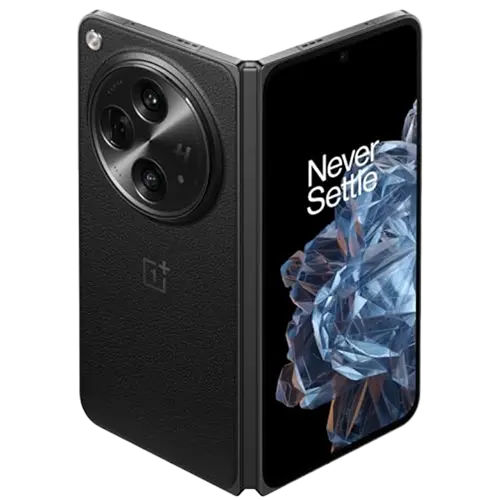
The OnePlus Open is OnePlus’ first foldable device, but after a launch In October 2023, it has not been replaced by a successor. That age shows in the chipset, which now trails current flagships by two generations, but other factors, like the camera, remain competitive.
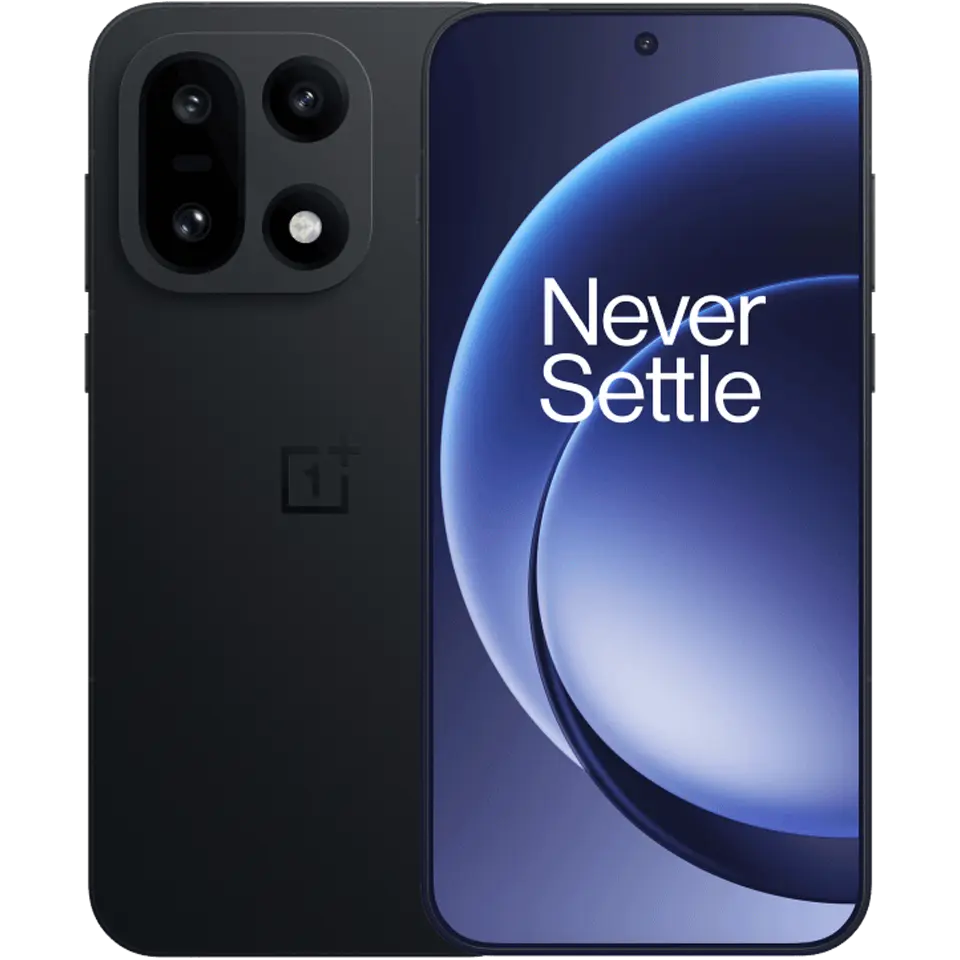
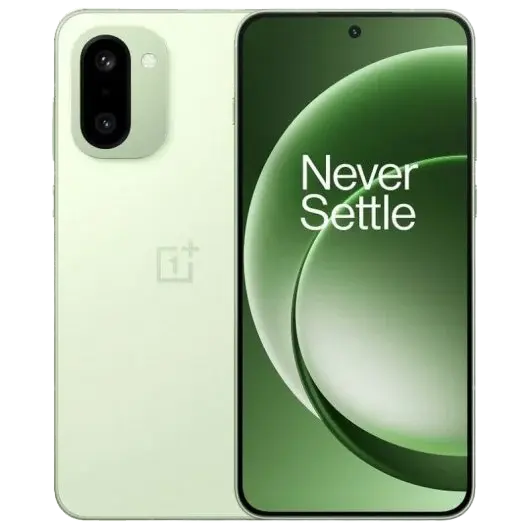
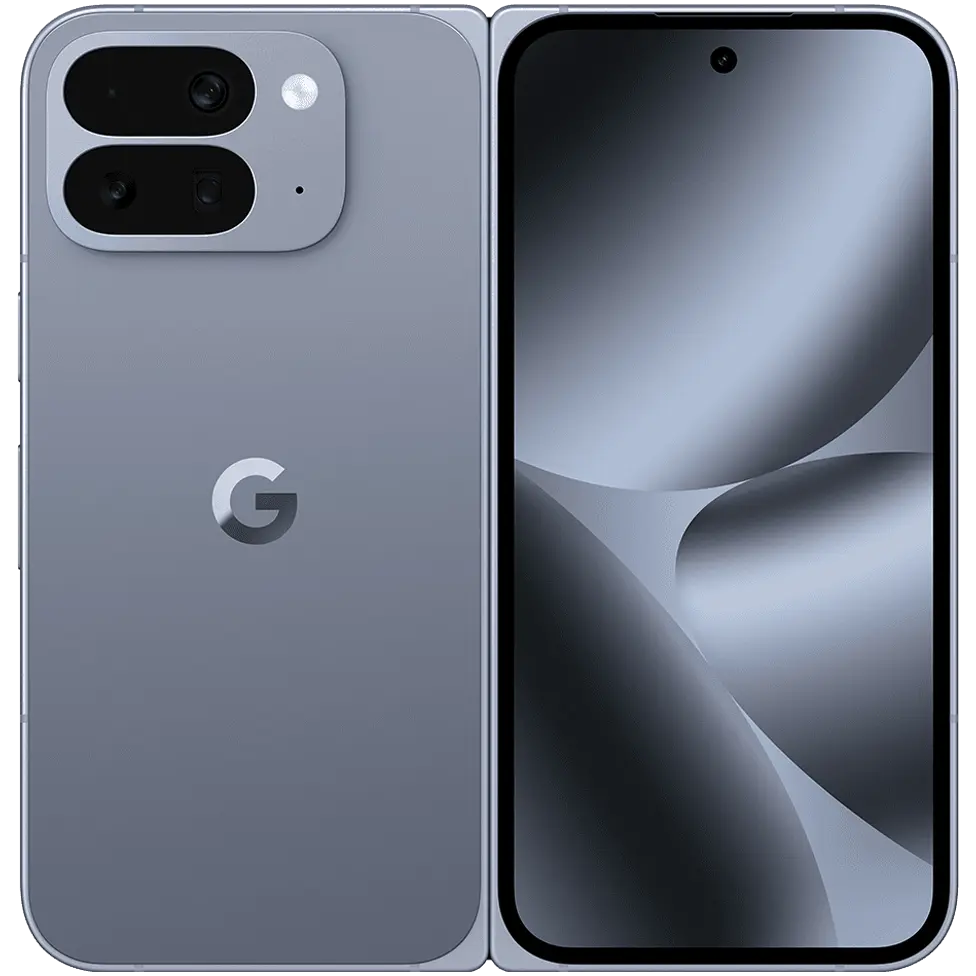
The Open competes today against the Samsung Galaxy Z Fold 7 ($2,000) and the Google Pixel 10 Pro Fold ($1,799) — both newer and more expensive. For the same $1,700, slab-style flagships like the Samsung Galaxy S26 Ultra ($1,300) and iPhone 17 Pro Max ($1,199) offer faster processors and better cameras in a more conventional form factor. The Open’s value proposition is the foldable experience itself — a tablet-sized inner display that folds into a normal phone.
Design
Specifications
The OnePlus Open measures 153.4 x 73.3 x 11.7mm folded and weighs 245 grams. It uses a metal frame with Ceramic Guard Glass on the 7.8-inch inner display, and a glass or vegan leather back depending on configuration. The outer display is 6.31 inches with a 20:9 aspect ratio and an 85.5% screen-to-body ratio; the inner display has a 9.68:9 aspect ratio and an 89.2% screen-to-body ratio. An IPX4 rating covers splashes from any direction, but the "X" means no dust ingress protection was certified, and there's no submersion rating. Bandicoot Lab does not formally test design or durability, so this section is descriptive rather than scored.
At 245 grams the OnePlus Open is heavier than most newer book-style foldables. The Samsung Galaxy Z Fold 7 is substantially lighter at 215 grams and thinner at 8.9mm folded, with a full IP48 rating. The Honor Magic V5 at 217 grams and 8.8mm folded is also lighter and thinner. The OnePlus Open's IPX4 rating is the weakest in this comparison set — no certified dust protection is a genuine durability concern for a foldable where the hinge mechanism is sensitive to grit ingress.
Display
Inner
The inner display is a 7.8-inch LTPO AMOLED at 2440 x 2268 resolution (426 pixels per inch), refreshing at 120Hz with adaptive refresh down to 1Hz.
It reaches 599 nits at maximum manual brightness — dimmer than the Galaxy Z Fold 7’s 734 nits and substantially behind the Pixel 10 Pro Fold’s 1,288 nits. HDR peak brightness on the inner display is 1,544 nits with 93% stability across window sizes. The Pixel 10 Pro Fold reaches 3,192 nits HDR peak and the Z Fold 7 hits 2,757 nits — both significantly brighter for HDR content. Sustained brightness holds at 98.4% over 30 minutes with no thermal throttling. Minimum brightness dips to 1.92 nits.
Color accuracy on the inner display is moderate. In Pro Mode (the best sRGB mode), the phone gets a respectable result in the midrange and primary colors. The error rises consistently through the upper grayscale, with a slight warm-magenta tint on whites. The Vivid Mode is poor at 3.71 average Delta E with heavy error across the entire gray ramp, and Natural Mode is similarly inaccurate at 3.93. The P3 modes cover nearly 100% of Display P3 but with error too high to be useful for color-critical work.
Display Gamut Coverage
Sustained Brightness
HDR Brightness
HDR Tone Mapping
Outer
The outer display is a 6.31-inch panel at 431 pixels per inch, also running at 120Hz with the same 1Hz adaptive floor. It hits 563 nits manual brightness with an HDR peak of 1,385 nits and 82.9% stability. Again, both competitors are substantially brighter on their outer screens.
The outer display is less accurate too. Pro Mode has the same warm-magenta tint escalating more aggressively through the upper grays. Vivid and Natural modes on the outer display average 4.22 and 4.32 Delta E respectively.
Display Gamut Coverage
Sustained Brightness
HDR Brightness
HDR Tone Mapping
Performance
The OnePlus Open runs a Snapdragon 8 Gen 2 with 16GB of RAM. GeekBench 6 results hit a 1,571 single-core and 4,938 multi-core. Speedometer scores 11.4. These were flagship-class results when the phone launched, but the generational gap is now wide. The Galaxy Z Fold 7’s Snapdragon 8 Gen 4 scores 3,006 single-core and 9,818 multi-core — nearly double the Open’s output. The Pixel 10 Pro Fold’s Tensor G5 scores 2,268 single-core and 5,986 multi-core.
GPU performance shows a similar gap. The 3DMark Wild Life Extreme stress test peaks at 3,681 with 66.5% stability — the Open throttles by a third over the 20-loop test as temperatures reach 42 degrees. The Z Fold 7 peaks at 6,615. Solar Bay returns 5,296 best loop with 67.2% stability. GeekBench AI scores 40,781 (quantized) and 17,003 (half precision), which remain competitive thanks to the Snapdragon 8 Gen 2’s NPU.
The 16GB of RAM provides generous headroom for the large inner display, and multitasking — the primary use case for a book-style foldable — remains fluid. The chipset handles daily tasks without issue, but the performance gap becomes apparent in sustained gaming and computationally intensive tasks where newer processors pull ahead.
Performance Benchmarks
Bars positioned relative to the best score in our database.
Wild Life Extreme Stress Test
Camera
The OnePlus Open has a 48-megapixel f/1.7 main camera at 24mm with a 1/1.43-inch sensor, a 48-megapixel f/2.2 ultrawide at 14mm with a 1/2.0-inch sensor, a 64-megapixel f/2.6 3x telephoto at 70mm with a 1/2.0-inch sensor, and two front cameras — a 20-megapixel f/2.2 inner camera and a 32-megapixel f/2.4 outer camera. Digital zoom extends to 120x.
The camera system is the Open’s strongest category relative to competitors. The main camera’s 1/1.43-inch sensor is larger than what the Galaxy Z Fold 7 and Pixel 10 Pro Fold offer. Dynamic range is a standout — the main camera and ultrawide both capture wide tonal ranges with well-controlled tone mapping. Main camera color accuracy in bright conditions is among the best of any phone in the database for hue accuracy, though the telephoto’s aggressive saturation boost in bright light and the front cameras’ heavy processing are weaker points.
Camera Sharpness
Main Camera
The main camera uses a 48-megapixel sensor with a 1/1.43-inch sensor size at f/1.7 and 24mm equivalent focal length.
Sharpness at 1x is solid in bright and mid conditions with controlled sharpening. Low-light sharpness drops modestly but remains clean. The 2x digital crop holds up well, with moderate sharpening maintaining usable detail.
Color accuracy is strong in bright conditions. The processing applies a moderate saturation boost that produces vivid but not unnatural results. Hue accuracy is tight in bright light, with near-zero bias on both color axes — the white balance system handles the test lighting accurately. In mid-light, the camera shows incomplete white balance correction for the warmer 4000K lighting, producing a slight warm cast. Dark-condition hue accuracy degrades moderately, with the warm cast persisting while the sensor maintains steady hue differentiation. Skin tone accuracy carries elevated error from the saturation boost, but the underlying hue rendering is clean.
Dynamic range is excellent. The main camera captures a very wide tonal range in auto mode with moderate compression and a well-behaved tone curve. This is one of the Open’s strongest individual results. Video stabilization is average.
Color Profile
Dynamic Range
Ultrawide Camera
The ultrawide uses a 48-megapixel sensor at f/2.2 with a 14mm equivalent focal length and a 1/2.0-inch sensor.
Sharpness is good across conditions, with controlled sharpening in bright and mid light. Color accuracy is near-neutral in bright conditions — the processing barely adjusts saturation, which is unusual. Hue accuracy is moderate. In mid-light and dark, the camera shows incomplete white balance correction — the warm cast increases similarly on the blue-yellow axis while the green-red axis stays stable. This means the ultrawide’s low-light color shift is primarily a white balance issue rather than sensor confusion, and the effect is consistent across conditions. Skin tones carry significant error in bright light from the processing pipeline rather than from hue shifts.
Dynamic range is excellent, matching the main camera’s wide tonal range with moderate compression. Video stabilization is, again, average.
Color Profile
Dynamic Range
Telephoto Camera
The telephoto uses a 64-megapixel sensor at f/2.6 with a 70mm equivalent focal length and a 1/2.0-inch sensor, providing a 3x optical zoom.
Sharpness at the native 3x focal length is good in bright conditions, with controlled sharpening. Mid-light sharpness is similar. Low-light sharpness drops but remains usable, though the processing applies heavier sharpening that produce edge artifacts. The digital zoom range through 6x holds detail well thanks to the 64-megapixel sensor resolution.
Color accuracy is a mixed result on the telephoto. In bright conditions, the processing applies a heavy saturation boost — the most aggressive of any lens on the Open. Colors are vivid and punchy, which many users will prefer, but it pushes skin tones away from accuracy. Hue accuracy remains reasonable in bright and mid-light, with moderate white balance correction that handles the warmer test lighting adequately. In dark conditions, saturation drops to near-neutral and hue accuracy degrades slightly. The telephoto produces consistent results across lighting despite the saturation variation.
Dynamic range is narrower than the main camera but well-controlled, with a near-linear tone curve and no tonal inversions. High-contrast scenes may clip some shadow detail. Video stabilization is good — the strongest of any lens on the device.
Color Profile
Dynamic Range
Front Inner Camera
The inner front camera of the OnePlus Open features a 20-megapixel f/2.2 lens at a 20mm equivalent with a 1/4.0-inch sensor. When it comes to capturing detail, it falls slightly behind its outer counterpart, relying heavily on sharpening in bright light. It has a distinct color rendering profile. In bright conditions, the camera applies a moderate saturation boost and a slight cool bias on the blue-yellow axis (the exact opposite of the warm cast seen on the rear cameras). In dark conditions, it overcorrects further into the cool spectrum while introducing sensor hue confusion on the green-red axis, resulting in an unusual overall cool-green cast. As a result, skin tones carry an elevated rate of error across all lighting conditions due to the persistent saturation boost.
While it boasts a wide dynamic range capable of capturing a broad tonal spread, the auto tone mapping applies heavy compression and multiple tonal inversions, producing flat, HDR-like selfies that lack natural contrast. At this time, we are unable to test the stabilization capabilities for this inner lens.
Color Profile
Dynamic Range
Front Outer Camera
The outer front camera is equipped with a higher-resolution 32-megapixel f/2.4 lens at 22mm, utilizing a larger 1/3.14-inch sensor. This setup resolves noticeably more detail than the inner camera, maintaining better overall sharpness across all lighting conditions through much more controlled sharpening. It mirrors the exact color accuracy profile of the inner lens, exhibiting the same moderate saturation boost and cool bias in bright light, as well as the unusual cool-green shift in dark conditions caused by overcorrection and hue confusion. Skin tones similarly carry elevated errors due to the artificial saturation.
Like the inner camera, it captures a wide dynamic range, but it handles the auto tone mapping significantly cleaner, avoiding the overly flat, artificial look of its counterpart.
Color Profile
Dynamic Range
Battery
The OnePlus Open has a 4,805mAh battery. Video playback on the inner display at 200 nits lasts 21 hours 35 minutes, while the outer display stretches to 26 hours 26 minutes. The Galaxy Z Fold 7 reaches 22 hours 34 minutes on its inner display and 28 hours 7 minutes on its outer, with a smaller 4,400mAh cell — better inner screen efficiency from Samsung’s newer chipset and panel. The Pixel 10 Pro Fold with its larger 5,015mAh battery reaches 22 hours 41 minutes on its inner display.
Web browsing drain over 5 hours is comparable with the Pixel 10 Pro Fold, but better than the Z Fold 7. Gaming drain during the stress test is 31%. Standby drain is 4% over 8 hours — higher than the 2–3% typical of newer devices, but still perfectly fine.
The Open gets through a full day for most users. The outer display’s 26-hour playback time means using the cover screen for quick tasks extends overall endurance meaningfully. At max brightness, inner display playback drops to 17 hours 42 minutes while the outer display reaches 23 hours 32 minutes.
Battery Life
Charging
The OnePlus Open supports 67W wired charging. There is no wireless charging, which is a notable omission at $1,700, where the Galaxy Z Fold 7 and Pixel 10 Pro Fold both include wireless charging.
Wired charging reaches 36% at 10 minutes and 83% at 30 minutes, with a full charge completing in about 42 minutes. This is the Open’s standout spec against its foldable competitors. The Galaxy Z Fold 7 with its 25W charger reaches just 53% at 30 minutes, and the Pixel 10 Pro Fold with 30W reaches 52%. The Open’s charging speed advantage is substantial.
Wired Charging Curve
Speaker
The OnePlus Open's speaker was weaker than its price suggests. Bass extension was moderate for a foldable at 20.2 dB of decay from the mids, better than the Galaxy Z Fold 7's 24 dB. The high end was the biggest weakness — the highs sat below the mids rather than extending above them, producing a rolled-off, muffled character. Loudness of 73.6 dBA was lower than the Z Fold 7's 76.6 dBA. Distortion was reasonable at 4.9%. The newer Pixel 10 Pro Fold and Z Fold 7 both deliver stronger overall speaker performance.
Speaker Frequency Response
Microphone
The microphone produced an above-average result. The frequency response is well-controlled through the midrange with a gradual rolloff in the high frequencies. Voice recordings and calls sound clear and natural.
Microphone Frequency Response
Other
Measurements
Specifications
The OnePlus Open uses a capacitive fingerprint sensor with an average unlock speed of 187.5 milliseconds — fast and responsive with no perceptible delay.
USB data transfer benefits from the USB-C 3.1 port. Maximum read speed is 154.5MB/s and maximum write speed is 124.2MB/s — dramatically faster than USB 2.0 phones and important for transferring large files or shooting video. The IPX4 rating provides splash protection only — a significant gap compared to the Pixel 10 Pro Fold’s IP68 full water and dust resistance and even the Z Fold 7’s modest IP48.
Conclusion
The OnePlus Open occupies an unusual position. Its Snapdragon 8 Gen 2 chipset now trails current flagships by two generations, putting it behind both the Galaxy Z Fold 7 and Pixel 10 Pro Fold in raw processing power and behind slab phones at half the price. Its display brightness is substantially lower than either competitor. It lacks wireless charging, and its IPX4 splash rating is the weakest water protection among its rivals.
What the Open still does well is offer camera system that outperforms both competing foldables, with a larger main sensor. The 67W wired charging is faster too. And the 16GB of RAM means multitasking on the large inner display remains smooth despite the older chipset.
For buyers choosing between the Open at $1,700 and the Galaxy Z Fold 7 at $2,000, the trade-off is that the Open offers better cameras, much faster charging, and a lower price, while the Z Fold 7 delivers a newer and faster chipset, a brighter display, wireless charging, and better water resistance. The Pixel 10 Pro Fold at $1,799 splits the difference with IP68 water resistance, a much brighter display, and Google’s camera processing. For buyers who don’t need the foldable form factor, a slab phone like the Galaxy S26 Ultra at $1,300 delivers better performance, a better display, better cameras, better battery life, and more — all for $400 less.