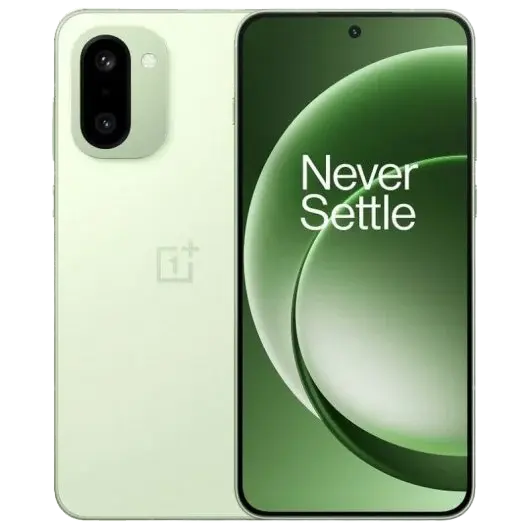
OnePlus
15R
Ranked #17 of 42 devices tested
Score Overview
The OnePlus 15R is the lower-cost sibling to the OnePlus 15, sharing the same Snapdragon 8 Gen 5 processor and a massive 7,400 mAh battery while trimming the camera system, charging speed, and a few material choices to hit a $700 price point. It targets buyers who want flagship-tier processing power and multi-day battery life without paying $900 or more.
The phone's strongest assets are its battery longevity and raw performance. It comfortably outlasts most phones in its price class on a charge and delivers processing power on par with devices costing significantly more. The display is bright and responsive, and biometric unlock is quick. The camera system is its clearest weakness.
Here’s how the OnePlus 15R performed in our testing.
Design
Specifications
The OnePlus 15R measures 163.4 x 77 x 8.1 mm and weighs 213 grams. It uses an aluminum frame, Gorilla Glass 7i front, and a back that varies by color option between glass and fiber-reinforced plastic. The 6.78-inch display fills 88.8% of the front surface, with a 19.8:9 aspect ratio. It carries an IP68/IP69K rating, meaning it's submersible in fresh water to at least 1.5 meters for 30 minutes, and the IP69K component indicates resistance to high-pressure, high-temperature water jets. It charges and connects via USB-C 2.0.
Compared to the OnePlus 15, the 15R is almost the same size (2 mm taller, 0.3 mm wider, identical thickness). The OnePlus 15 uses Gorilla Glass Victus 2 on the front, though. Against the Samsung Galaxy S26 at $900, the 15R is substantially larger and 46 grams heavier, a difference you will notice in a pocket or one-handed use. The iPhone 17, at $800, is similarly compact at 177 grams.
Display
The OnePlus 15R has a 6.78-inch AMOLED display at 1264 x 2780 resolution (450 pixels per inch), with a refresh rate that adjusts between 60 Hz and 165 Hz. The higher ceiling means smoother motion during gaming than the 120 Hz panels on the iPhone 17, Galaxy S26, and Pixel 10, though the benefit is limited to content and apps that support frame rates above 120.
Manual brightness tops out at 788 nits, which is adequate for most indoor and outdoor use but noticeably lower than the Google Pixel 10's 1,496 nits. In HDR content, peak brightness reaches 3,158 nits for small bright elements, which is strong. At the low end, minimum brightness dips to about 2 nits, which is fine for dark rooms but not as dim as the sub-1-nit minimums on the OnePlus 15 or Galaxy S26. Overall brightness stability during standard use is 98.9%, meaning the screen holds its luminance reliably.
Color accuracy is good in Pro Mode, where colors are calibrated to the sRGB standard with an average Delta E of 1.3, meaning color deviations from reference values are small enough that most people won't notice them. In that mode the display covers 100% of sRGB and 75% of Display P3. Vivid Mode expands the gamut to 98.2% of Display P3, useful for wide-color content like HDR video, though average color error rises to 2.69, which is still reasonable. Natural Mode lands between the two, with an average Delta E of 2.5 against sRGB. These are solid accuracy numbers, comfortably ahead of the Galaxy S26's best mode and the OnePlus 15's own display.
Touch latency averages 24.1 milliseconds, which is responsive enough that most users won't perceive any delay between a tap and the screen's reaction. The OnePlus 15 is faster at 15.5 ms, but the practical difference between the two is marginal.
Display Gamut Coverage
Sustained Brightness
HDR Brightness
HDR Tone Mapping
Performance
The OnePlus 15R runs the Qualcomm Snapdragon 8 Gen 5 with 12GB of RAM. It posts a Geekbench 6 single-core score of 2,862 and a multi-core score of 9,555. The single-core figure trails the Samsung Galaxy S26's 3,709 and the OnePlus 15's 3,606, both of which use the Snapdragon 8 Elite Gen 5 variant, while multi-core performance is close to the iPhone 17's 9,645. The Google Pixel 10 with its Tensor G5 scores lower across the board at 2,271 single-core and 6,137 multi-core. For everyday tasks like app switching and multitasking, the 15R is fast, but the gap to the Elite variant of its own chipset is visible in benchmarks.
GPU performance is strong. In the 3DMark Wild Life Extreme stress test, the 15R peaked at 5,079 and sustained 3,606 at its lowest loop, yielding 71% stability. That stability figure is better than the OnePlus 15 (63.7%) and Galaxy S26 (45.8%), meaning the 15R throttles less during prolonged gaming sessions, even though its absolute peak is lower. In the Solar Bay ray-tracing benchmark, it scored 9,244 at peak with 69.6% stability, again showing better sustained performance than the Galaxy S26's 47.4% stability despite a lower ceiling.
Browser performance via Speedometer averaged 18, which is below the iPhone 17's 33.5, the Galaxy S26's 36.7, and even the Pixel 10's 20.3.
Performance Benchmarks
Bars positioned relative to the best score in our database.
Wild Life Extreme Stress Test
Camera
The OnePlus 15R has a 50-megapixel f/1.8 main camera (1/1.56-inch sensor, 24mm equivalent), an 8-megapixel f/2.2 ultrawide (1/4.0-inch sensor, 16mm equivalent), and a 32-megapixel f/2.0 front camera (25mm equivalent). There is no dedicated telephoto lens. The phone reaches up to 20x digital zoom.
The camera system is the 15R's weakest area. Overall camera performance falls well below the Samsung Galaxy S26 and the OnePlus 15, and it trails even the iPhone 17 and Pixel 10. The main lens produces decent sharpness in good light, and the front camera is a relative bright spot with better color accuracy than the rear cameras. The ultrawide is constrained by its low resolution and small sensor.
Sharpness holds up reasonably through moderate zoom levels but collapses at the far end. At 1x in bright light, the main camera resolves well, and detail stays usable through 3x and 4x. By 8x, sharpness has dropped by roughly three-quarters from its 1x peak. At 10x, detail is noticeably soft, and at the maximum 20x, images are very soft in all lighting conditions. The OnePlus 15, which has a dedicated telephoto, maintains much higher detail at 10x and 20x, as does the Pixel 10 with its 5x telephoto lens. The Samsung Galaxy S26 with its 3x telephoto likewise holds more detail through its zoom range. For buyers who frequently crop or zoom, the 15R's lack of a telephoto is a tangible limitation.
Camera Sharpness
Main
In bright light, the main camera resolves well at 1x with minimal artificial sharpening. Detail remains strong at 2x, where the phone is essentially cropping the 50-megapixel sensor. Sharpness in mid and dark conditions stays consistent at 1x, which is a strength.
Color accuracy is the main camera's biggest issue. In bright light, skin tones shift noticeably warm and images are pushed toward yellows, with overall color error high enough that colors look distinctly different from the scene. In mid-light, which simulates warm indoor conditions, the yellow push increases, and hue accuracy worsens as the white balance overcompensates for the warmer color temperature. In low light, hues shift further, with a strong warm and reddish cast creeping in as the processing tries to compensate for the dimmer, warmer environment. The underlying sensor captures reasonably accurate color in raw mode across all three conditions, so the issue is predominantly in the image processing pipeline, not the hardware.
Dynamic range in auto mode captures a reasonable spread of shadow and highlight detail, though highlights clip sooner than on the Samsung Galaxy S26 or iPhone 17. In high-contrast scenes, bright areas like skies or windows will lose detail before the shadows do.
Color Profile
Dynamic Range
Ultrawide
The 8-megapixel ultrawide is limited by its resolution and small 1/4.0-inch sensor. In good light, it resolves adequately for social media and casual use, but the gap to the main lens is significant in fine detail. In mid and low light, sharpness drops. Raw files from the ultrawide show considerably less resolved detail than the main camera's raw output, which is expected given the sensor size difference.
Color behavior mirrors the main camera's tendencies — warm bias in processed images, particularly in mid and low light, with yellows pushed harder. In low light, hue accuracy deteriorates substantially, with a strong warm and reddish cast driven primarily by incomplete white balance correction for the warmer test lighting. Dynamic range is acceptable in auto mode, with some highlight clipping.
The OnePlus 15's 50-megapixel ultrawide and the Samsung Galaxy S26's 12-megapixel ultrawide both resolve more detail and produce more accurate color. The iPhone 17's 48-megapixel ultrawide is also a step up.
Color Profile
Dynamic Range
Front
The 32-megapixel front camera is the strongest lens on the 15R in terms of color fidelity. In bright light, saturation is pushed slightly, but hue accuracy is better than either rear camera. In mid-light conditions, color error drops to low levels, with skin tones rendered fairly close to life. In low light, accuracy degrades with some warm shift, but the front camera handles this better than the main or ultrawide.
Sharpness is good in bright and mid conditions, and holds up reasonably in low light. Video stabilization is effective, with less residual shake than the iPhone 17's or Pixel 10's front cameras. Dynamic range is a genuine strength of this lens, capturing more usable range between shadows and highlights than the main camera in auto mode.
Color Profile
Dynamic Range
Battery
The OnePlus 15R has a 7,400 mAh battery. In our video playback test at maximum brightness, it lasted 32 hours and 25 minutes. At a calibrated 200 nits, it reached 44 hours and 12 minutes. That's exceptional longevity. For reference, the OnePlus 15 with its 7,300 mAh cell managed 34 hours and 38 minutes at max brightness. The iPhone 17 lasted 19 hours and 13 minutes, and the Samsung Galaxy S26 managed 26 hours and 50 minutes. In practical terms, the 15R can handle two full days of heavy video consumption before needing a charge.
Web browsing drain over our 5-hour test was 22%, identical to the iPhone 17 and close to the Pixel 10's 23%. The OnePlus 15 drained only 16% in the same test.
Gaming drain was 19% during the 3DMark stress test's 20 loops, which is low. The iPhone 17 and Galaxy S26 both drained 27% in the same test, and the OnePlus 15 drained 23%. Standby drain was 12% over 8 hours overnight, which is high. The iPhone 17 and Galaxy S26 each lost only 2%, and even the OnePlus 15 lost only 4%. That standby drain will eat into the battery advantage if the phone sits idle for long stretches.
Battery Life
Charging
The OnePlus 15R supports 80W wired charging with no wireless charging. After 10 minutes on the charger, it reaches 26%. After 30 minutes, it hits 63%. That's a reasonable pace for the battery's size. The OnePlus 15, with 120W charging and a slightly smaller 7,300 mAh battery, reaches 37% in 10 minutes and 88% in 30 minutes, a substantially faster fill. The iPhone 17 with its 40W adapter reaches 28% in 10 minutes and 73% in 30 minutes, but its battery is less than half the capacity.
Against similarly priced phones, the 15R's charging is middle of the pack. It won't get you from empty to full during a quick stop, but 30 minutes gets you well past half, which is enough for most of a day's use given the battery's size.
Wired Charging Curve
Speaker
The OnePlus 15R's speaker reaches 71.5 dBA at maximum volume. That's quieter than the Pixel 10 (76 dBA), Galaxy S26 (72.5 dBA), and iPhone 17 (75 dBA), though the gap to some of those is small in practice.
The bigger issue is distortion. Average total harmonic distortion is 15.98%, which is high. For context, the Galaxy S26 measures 3.4%, the iPhone 17 measures 4.5%, and even the OnePlus 15 comes in at 7.9%. At moderate volumes the 15R sounds acceptable, but pushing it toward maximum introduces audible harshness, particularly in vocals and midrange content.
The frequency character leans toward the midrange and treble, with less bass presence than phones like the Galaxy S26 or iPhone 17. Overall, the speaker is the weakest-scoring component on the phone and is noticeably behind what comparably priced devices offer. For anything beyond casual listening, external speakers or headphones are advisable.
Speaker Frequency Response
Microphone
The microphone's frequency response has a standard deviation of 6.04, which is below the average for phones we've tested. This means the microphone's sensitivity varies more across different frequencies, leading to a less even, less natural sound capture. For voice calls and basic video recording it's adequate, but it won't reproduce ambient sound or music with the fidelity of phones like the Galaxy S26 or Pixel 10, which have tighter frequency responses.
Microphone Frequency Response
Other
Measurements
Specifications
The OnePlus 15R uses an ultrasonic fingerprint sensor that unlocks in an average of 158.3 milliseconds. That's quick and among the faster results we've measured. There is no hardware-based face unlock.
Data transfer over the USB-C 2.0 port maxes out at 41.5 MB/s read and 36.3 MB/s write for large files. That's typical for USB 2.0 but far behind the OnePlus 15 (298 MB/s read) and Galaxy S26 (335 MB/s read), both of which use USB 3.2. Moving large files to a computer will take noticeably longer.
Storage is available in 256GB and 512GB configurations, both with 12GB of RAM.
Conclusion
The OnePlus 15R is built around two strengths: battery life and processing power. Its 7,400 mAh cell delivers genuine multi-day longevity that few phones at any price can match, and the Snapdragon 8 Gen 5 provides smooth, capable performance for gaming and general use. The display is bright, color-accurate in its calibrated modes, and responsive. Fingerprint unlock is fast.
The tradeoffs include that the camera system is below average for a $700 phone, particularly in color accuracy across all lenses and in zoom quality beyond moderate distances. The speaker distorts at higher volumes. Standby drain is high. And USB-C 2.0 limits data transfer speeds in a way that the OnePlus 15 and Galaxy S26 avoid with their USB 3.2 ports. Buyers who prioritize camera quality or audio should look elsewhere, perhaps at the Samsung Galaxy S26 for a more balanced package. For those who value endurance and performance above all else, the 15R delivers on those specific promises.
Related
Best Phone Displays
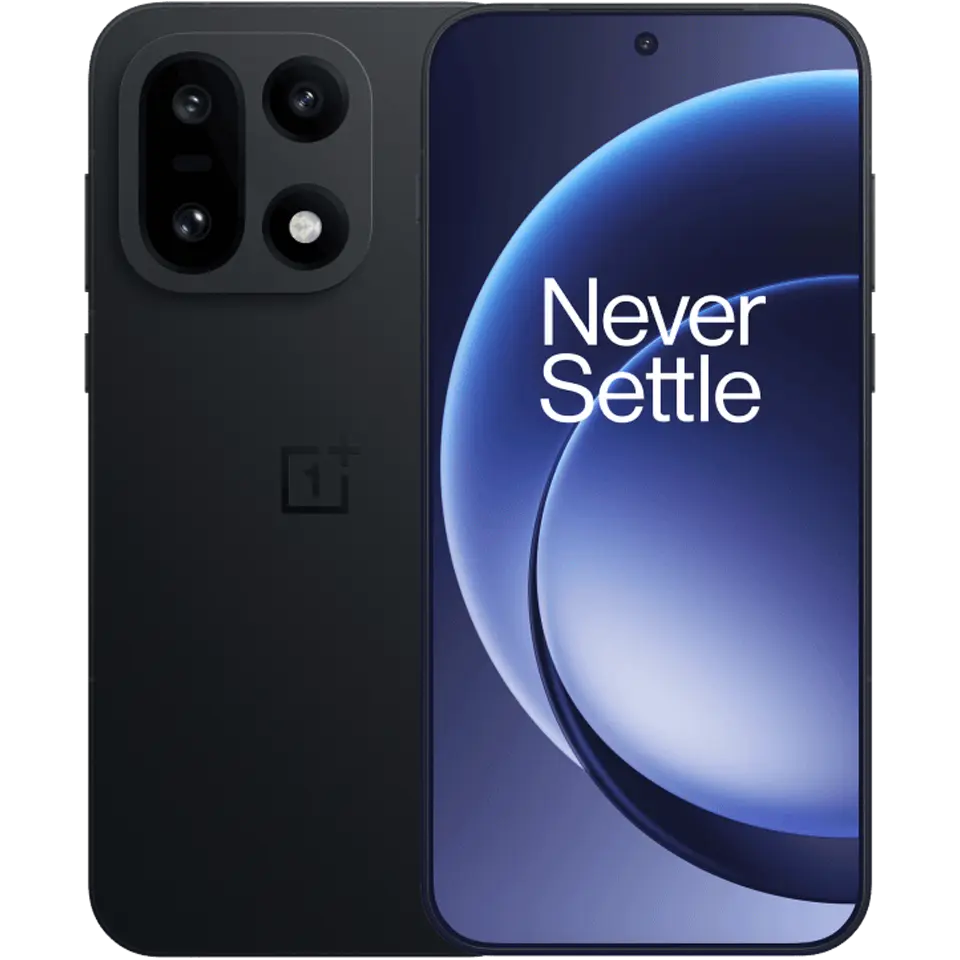
OnePlus
15
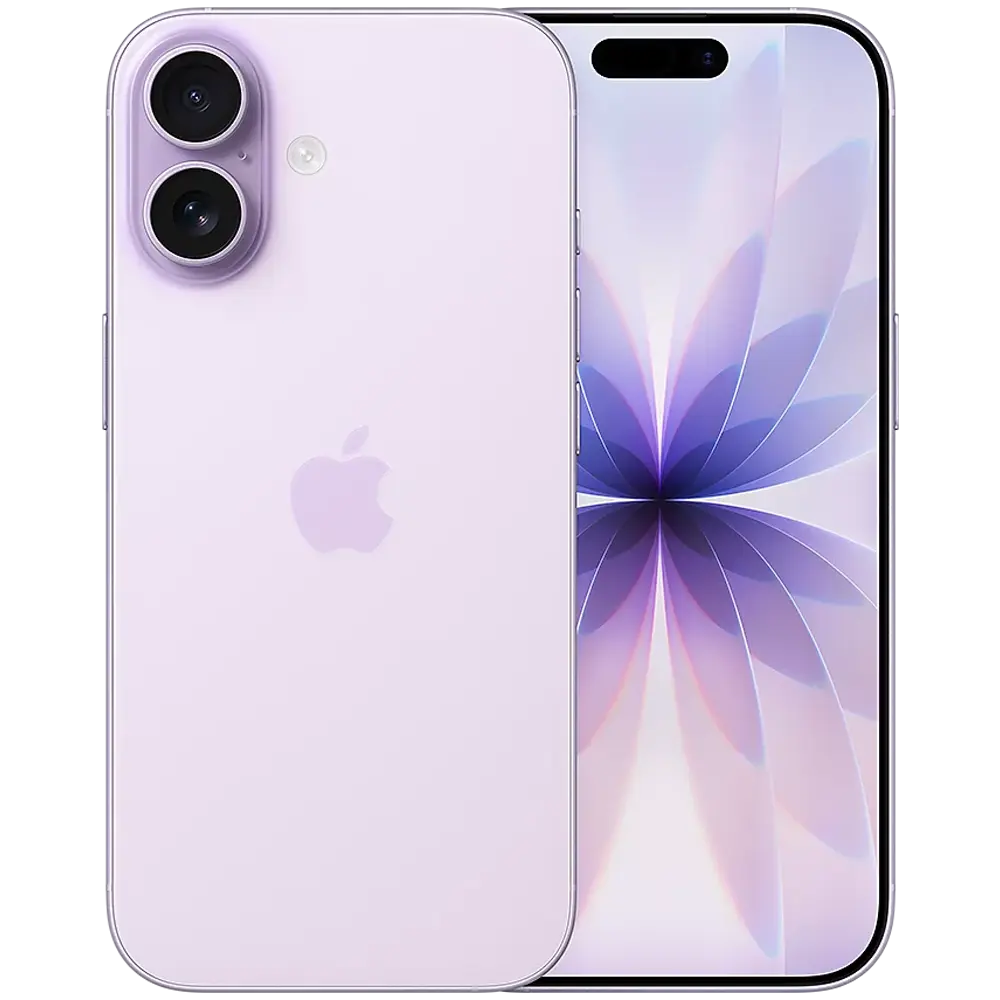
Apple
iPhone 17
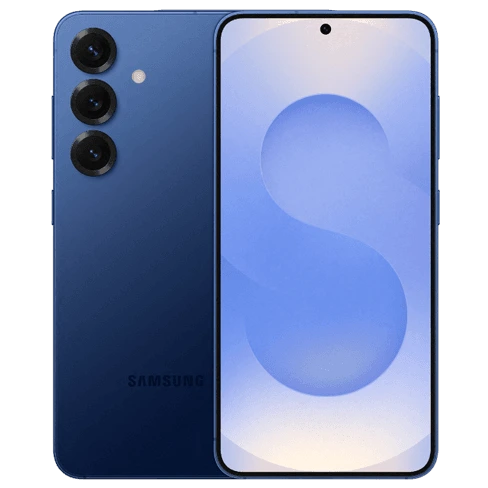
Samsung
Galaxy S25
Xiaomi
15T Pro
Nothing
Phone (3)
Pixel 10
Motorola