Nothing
Phone (3)
Ranked #25 of 42 devices tested
Score Overview
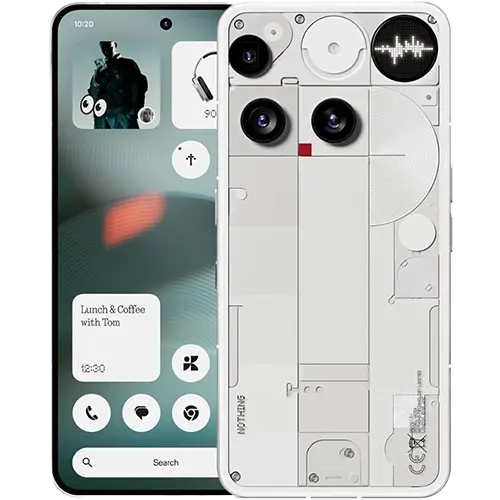
The Nothing Phone (3) is Nothing flagship phone for 2025, and still available in 2026. Currently, it competes at $799 against the iPhone 17, Google Pixel 10, and Samsung Galaxy S26. It targets buyers who want a complete camera system with a telephoto lens, fast wired charging, and solid battery life without paying $1,000 or more.
The phone's camera system is its standout feature, delivering strong sharpness across all four lenses and consistent color accuracy that holds up well in varied lighting. Battery life is above average, and 65W wired charging fills the battery quickly. The display lags behind rivals in both brightness and color accuracy though. Performance is adequate but sits below what phones at this price typically deliver with newer processors.
Here’s how the Nothing Phone (3) performed in our tests.
Design
Specifications
The Nothing Phone (3) measures 160.6 x 75.6 x 9mm and weighs 218g. That makes it larger and heavier than many other options at this price. The iPhone 17, Google Pixel 10, and Samsung Galaxy S26 are all smaller and lighter. It's a big phone, and the 9mm thickness is chunky for this price range.
The frame is aluminum, the front is Gorilla Glass 7i, and the back is Gorilla Glass Victus. It carries an IP68 rating, meaning it's rated for submersion in fresh water to 1.5 meters for 30 minutes. The display has a 20.1:9 aspect ratio and an 89% screen-to-body ratio, which is slightly lower than the iPhone 17's 91.1% and the Galaxy S26's 90.8%, meaning marginally thicker bezels — but they’re not noticeably thick. The port is USB-C 2.0, the same as the iPhone 17 but behind the Galaxy S26 and Pixel 10, which both offer USB-C 3.2 for faster data transfer.
Bandicoot Lab does not formally test design or durability.
Display
The Phone (3) has a 6.7-inch OLED display at 1080 x 2412 resolution with 460 pixels per inch, a 120Hz maximum refresh rate that drops to 30Hz.
Manual brightness tops out at about 790 nits, which is below average for this price. The Google Pixel 10 reaches roughly 1,496 nits manually, nearly doubling the Phone (3). The iPhone 17 and Galaxy S26 sit at approximately 854 nits and 641 nits respectively, so the Phone (3) splits the difference between those two but falls well short of the Pixel 10. Minimum brightness drops to about 2.1 nits, adequate for dark rooms.
HDR brightness reaches approximately 1,602 nits at small window sizes, with 98.7% brightness stability under sustained 30-minute HDR load. That stability is excellent: the display holds its HDR brightness over time with almost no drop. The iPhone 17, by comparison, peaks far higher at around 3,022 nits but drops to 40.5% stability, meaning it cannot maintain that brightness for sustained viewing.
Color accuracy is a weakness. In Standard Mode, targeting the sRGB color space (the standard range used in most web and app content), the display's average color error (Delta E) is 2.68. Lower Delta E values mean more accurate colors, and a value under 2 is generally considered indistinguishable from the reference. At 2.68, colors drift from their target values, particularly at the extremes where errors spike to 7.76. The iPhone 17 achieves an average Delta E of 0.94, and the OnePlus 15R hits 1.3 in its Pro Mode, both substantially more accurate. In Alive Mode targeting Display P3 (a wider color space used in HDR content and photos), gamut coverage reaches 93.83% of Display P3.
Touch latency averages 13.6ms, which is fast. The iPhone 17 lags at 57ms, and the Pixel 10 at 22.6ms. In practice, the difference between 13.6ms and 22.6ms is unlikely to be perceptible for most tasks, though.
Display Gamut Coverage
Sustained Brightness
HDR Brightness
HDR Tone Mapping
Performance
The Phone (3) is powered by the Qualcomm Snapdragon 8 Gen 3 with 12GB or 16GB of RAM. Storage options are 256GB and 512GB.
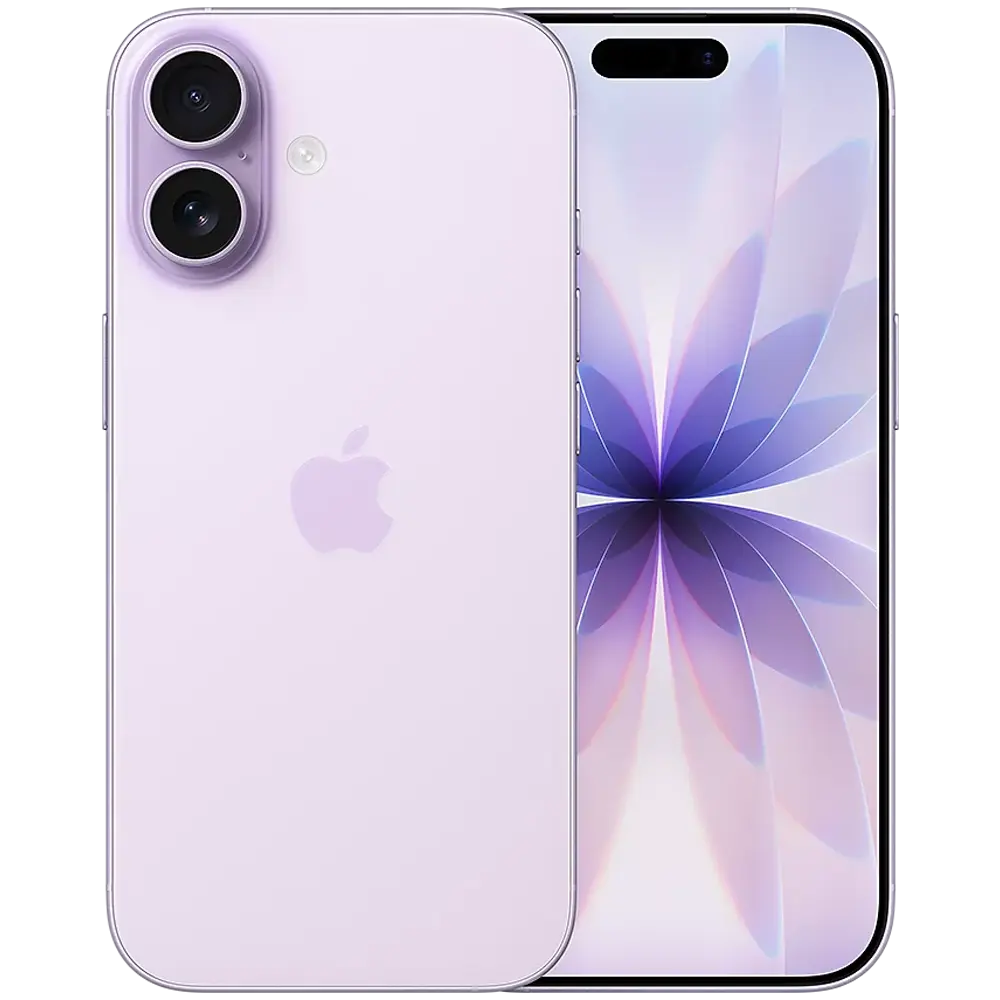
Geekbench 6 single-core scores land at 2,209, and multi-core at 6,992. These are reasonable for the Snapdragon 8 Gen 3 but well behind the newer processors in same-priced rivals. The Samsung Galaxy S26 with its Snapdragon 8 Elite Gen 5 scores 3,709 single-core and 11,232 multi-core. The iPhone 17 with the A19 reaches 3,772 and 9,645. Even the Pixel 10's Tensor G5, which is generally weaker, posts a comparable single-core score of 2,271. The Phone (3) uses a generation-old flagship chip, and benchmark results reflect that.
GPU performance in the 3DMark Wild Life Extreme stress test peaks at 4,459, dropping to 2,872 at its worst loop for 64.4% stability. The peak is decent but the stability is mediocre — the phone loses over a third of its GPU performance during sustained loads as thermals climb. The Galaxy S26 peaks much higher at 7,740 but has worse stability at 45.8%. The OnePlus 15R, despite costing $100 less, peaks at 5,079 with 71% stability. In the newer Solar Bay test, the Phone (3) scores 8,126 at its best loop with 61.7% stability.
Browser performance in Speedometer lands at 20.6, which is low. The Galaxy S26 hits 36.7, and the iPhone 17 reaches 33.5. Web browsing will feel noticeably slower on the Phone (3) compared to these rivals.
Performance Benchmarks
Bars positioned relative to the best score in our database.
Wild Life Extreme Stress Test
Camera
The Phone (3) has a four-camera system, made up of a 50-megapixel main camera, a 50-megapixel ultrawide, a 50-megapixel telephoto with 3x optical zoom, and a 50-megapixel front camera. The camera overall score of 571.8 places it ahead of the $799 competition — including the iPhone 17, which scores 429, the Pixel 10 at 399.6, and the Galaxy S26 at 512.6.
Sharpness is strong across all lenses and holds up well as you zoom deeper. At 10x in bright light, the Phone (3) resolves noticeably more detail than the iPhone 17 or OnePlus 15R. At 20x, detail remains usable, and even 30x in bright conditions retains reasonable clarity. Beyond 30x, sharpness degrades substantially. The 60x maximum zoom in bright light produces heavily softened images with minimal resolved detail. The same pattern holds in darker conditions, though the dropoff starts earlier. This is a meaningful advantage over phones without a dedicated telephoto. For example, the iPhone 17, which relies entirely on digital crop from its main sensor, falls off sharply past 3-4x.
Camera Sharpness
Main
The main camera uses a large 1/1.3-inch, 50-megapixel sensor at f/1.7 with a 24mm equivalent focal length. Sharpness in bright light is high, and it holds up well as conditions deteriorate. In dark conditions (10 lux), the sensor still resolves good detail without excessive softening from noise reduction.
Color accuracy in auto mode varies with lighting. In bright light (1000 lux, 5500K), saturation stays close to neutral at about 101%, meaning the camera isn't aggressively pushing colors. Skin tones drift more than overall colors, but hue accuracy is good with minimal shifting between color families. In mid-light (100 lux, 4000K), the camera pulls saturation back slightly and maintains fairly neutral white balance with minimal warm or cool bias. In dark conditions (10 lux, 3000K), hue accuracy degrades modestly, which is a sensor limitation at higher ISO rather than a white balance issue, as the warm/cool bias remains well controlled. This is a meaningfully different result from the iPhone 17, which shows substantial warm bias in its mid and dark auto shots, pushing yellows and oranges heavily.
Dynamic range in auto mode captures a wide tonal range, preserving shadow detail and retaining separation in high-contrast scenes. Highlights do clip in very bright areas, which is common for aggressive HDR processing. The processing compresses tones moderately, keeping images from looking flat.
Color Profile
Dynamic Range
Ultrawide
The ultrawide uses a 50-megapixel f/2.2 sensor (1/2.76-inch) at 15mm equivalent. Sharpness is strong for an ultrawide, and detail in bright conditions is high. In mid and dark light, it holds up reasonably well.
Color accuracy is lower than the main camera. In bright light, the ultrawide pushes reds and warm tones harder, and skin tones drift more noticeably from reality. In dark conditions, a slight warm shift creeps in as the white balance struggles with the warmer test illuminant. Overall saturation stays slightly under 100% across conditions, meaning images look natural in their vibrancy even if specific hues are off.
Dynamic range in auto mode is slightly narrower than the main camera, and highlight clipping begins a bit sooner. The difference is small enough that most scenes will look similar between the two lenses, but the ultrawide will lose some bright sky or window detail that the main retains.
Color Profile
Dynamic Range
Telephoto
The telephoto uses a 50-megapixel f/2.7 sensor (1/2.75-inch) at 72mm equivalent, providing 3x optical zoom. Color accuracy is the strongest of any lens on this phone and outperforms most competitors by a significant margin. In bright light, saturation is pushed to about 109%, giving images a slightly vivid look without appearing unnatural. That said, hue accuracy stays tight across lighting conditions, and white balance handles the shift from cool to warm illuminants cleanly. In dark conditions, a mild warm shift appears, primarily a white balance response to the 3000K test illuminant rather than sensor-level hue confusion.
Sharpness at 3x is good in bright and mid light. In dark conditions, though, the smaller sensor shows its limits, and fine detail softens noticeably. Beyond 3x, the phone relies on digital processing. At 5-6x, detail stays respectable. At 10x, it's still usable. The falloff is gradual rather than sudden, which is a sign of effective upscaling.
Dynamic range in auto mode is wide, with the processor preserving good separation between shadows and highlights. Highlights clip less aggressively than on the main camera.
Video stabilization on the telephoto shows more shake residual than the main or ultrawide lenses, which is expected at longer focal lengths.
Color Profile
Dynamic Range
Front
The front camera is a 50-megapixel f/2.2 sensor at 25mm equivalent. Sharpness is very good. In bright light, it resolves substantial detail, and even in dark conditions, it holds up well.
Color accuracy is good overall. In bright light, there's a slight cool bias and moderate hue shift, but skin tones stay reasonably accurate. In mid light, accuracy improves, with neutral bias and lower error. In dark conditions, a cool shift appears and skin tone accuracy degrades, a white balance issue as the camera slightly overcompensates for the warm ambient light.
Dynamic range in auto mode is the widest of any lens on the phone, preserving extensive shadow and highlight detail in high-contrast selfie scenarios like backlit subjects. Video stabilization is adequate but not exceptional.
Color Profile
Dynamic Range
Battery
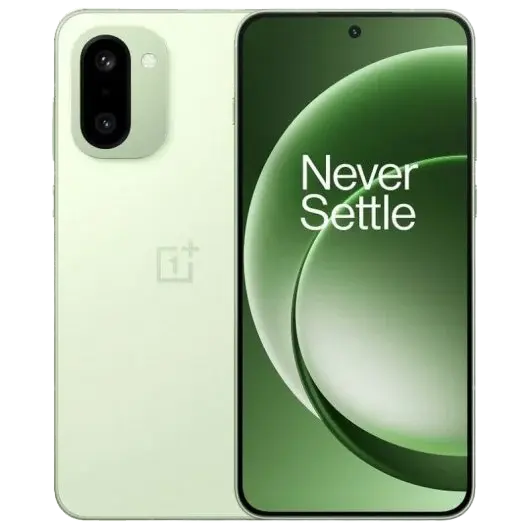
The Phone (3) has a 5,000mAh battery. Video playback at 200 nits reaches 27 hours and 29 minutes, comfortably above the iPhone 17's 22 hours and 10 minutes and the Pixel 10's 23 hours and 6 minutes. The OnePlus 15R, with its much larger 7,400mAh battery, pulls far ahead at 44 hours and 13 minutes. At maximum brightness, video playback drops to 21 hours and 8 minutes.
Web browsing drain over 5 hours consumes 30%, meaning a full charge would sustain roughly 16-17 hours of continuous browsing. That's a weaker result than the iPhone 17 (22% drain) and the Pixel 10 (23% drain), both of which would last considerably longer in a web-heavy usage pattern. The OnePlus 15R matches the iPhone 17 at 22%.
Gaming drain during the 3DMark stress test (20 loops) consumes 28%, a heavier draw than the Pixel 10's 22% or the OnePlus 15R's 19%, partly reflecting the higher thermal output of the Snapdragon 8 Gen 3 under sustained GPU load. The iPhone 17 drains 27% from a much smaller battery during the same test.
Standby drain is excellent at 1% over 8 hours overnight. Most phones lose 2-3% or more. The OnePlus 15R loses a substantial 12% in the same period.
In practical terms, the Phone (3) will handle a full day of mixed use without concern. Heavy browsing and gaming will drain it faster than its key rivals, but strong video playback endurance and minimal standby loss compensate.
Battery Life
Charging
The Phone (3) supports 65W wired charging and 15W wireless charging. With a wired connection, it reaches 22% in 10 minutes and 63% in 30 minutes. That 30-minute figure matches the OnePlus 15R's 63% (from an 80W charger filling a much larger 7,400mAh cell) and lands ahead of the Pixel 10's 57% and the Galaxy S26's 58%. The iPhone 17 reaches 73% in 30 minutes, though from a much smaller 3,692mAh battery.
Wireless charging is quite slow, hitting 4% in 10 minutes and 10% in 30 minutes. The Pixel 10, also rated at 15W wireless, manages 30% in 30 minutes, three times as much. The iPhone 17 with 25W wireless hits 49%.
Wired Charging Curve
Wireless Charging Curve
Speaker
The speakers reach 73.1 dB at maximum volume, which is average for this price range. The Pixel 10 is louder at 76 dB, and the iPhone 17 hits 75 dB. The OnePlus 15R is quieter at 71.5 dB.
Average total harmonic distortion is 3.46%, which is low. The phone stays clean at high volumes without audible crackling or harshness. The Galaxy S26 achieves a similar 3.44%, and both are substantially cleaner than the OnePlus 15R's 15.98% or the iPhone 17's 9.69%.
The frequency response leans toward the upper registers. High-end clarity is decent but not exceptional, while bass is thin. If you're listening to music or watching video through the speakers, don't expect much low-end warmth. The OnePlus 15R has a similar bass limitation. The iPhone 17 and Galaxy S26 both deliver noticeably fuller bass with better high-end extension.
Speaker Frequency Response
Microphone
Microphone quality is below average. Frequency response has a standard deviation of 6.87 dB, meaning the microphone emphasizes some frequencies and drops others unevenly. The Galaxy S26 (4.06 dB), Pixel 10 (4.3 dB), and both iPhones (around 4.5 dB) all produce more balanced recordings. Voice calls will be intelligible, but voice memos, video audio, and conference calls won't match the clarity of most similarly priced phones.
Microphone Frequency Response
Other
Measurements
Specifications
The fingerprint sensor is optical and unlocks in an average of 208ms. That's functional but not fast. The OnePlus 15R's ultrasonic sensor averages 158ms, and the Pixel 10's ultrasonic sensor is even quicker at 194ms. The difference between 158ms and 208ms is pretty minor, though. The phone has no hardware-based face unlock.
Data transfer uses USB-C 2.0, with maximum read and write speeds around 38 MB/s. This is identical to the iPhone 17's USB-C 2.0 speeds. The Pixel 10 with USB-C 3.2 reaches 106 MB/s reads, and the Galaxy S26 reaches 335 MB/s. Transferring large files or video off the Phone (3) over a cable will be slow. Storage options are 256GB and 512GB with no expandable storage.
Conclusion
The Nothing Phone (3) makes its strongest case through its camera system. All four lenses produce sharp images with consistent, restrained color tuning, and the telephoto lens in particular delivers color accuracy that rivals struggle to match. Sharpness at extended zoom levels holds up better than any other phone in this price range, giving it a genuine advantage for anyone who regularly crops or zooms.
Outside of the camera, the picture is more mixed. Battery life for video and standby is strong, and wired charging is fast. The Snapdragon 8 Gen 3 delivers adequate day-to-day performance but falls measurably behind the newer chips in the iPhone 17 and Galaxy S26 in both CPU and GPU benchmarks. The display is dim by flagship standards and less color-accurate than cheaper alternatives. At $799, the Phone (3) is a camera-first phone that makes real compromises elsewhere, and whether those tradeoffs make sense depends heavily on how much the camera matters to you.
Related
Best Camera Phones
Nothing
Phone (4a)
Nothing
Phone (4a) Pro
OnePlus
13
OnePlus
15R
Apple
iPhone 17
Samsung
Galaxy S25
Xiaomi
15T Pro