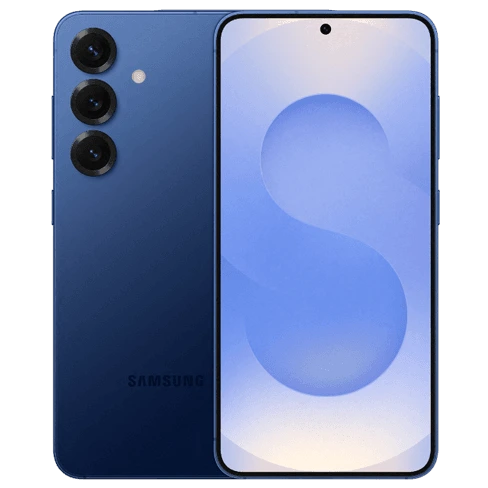
The Galaxy S25 launched at $799.99 as Samsung's compact flagship, pairing the Snapdragon 8 Elite with a triple-camera system (main, ultrawide, and 3x telephoto) in a 162-gram body. It shared the same chip and camera hardware as the $999.99 Galaxy S25+, with the main tradeoffs being a smaller 4,000 mAh battery, slower 25W wired charging (versus 45W on the S25+), and a lower-resolution, smaller display.
The Galaxy S26 has since replaced it at $899.99 — a $100 price increase for a newer Snapdragon 8 Elite Gen 5, a larger 4,300 mAh battery, and improved camera processing, though the camera hardware itself is largely unchanged. For buyers considering a discounted S25, the main question is whether the S26's processing and battery gains justify the higher price, or whether the $799 iPhone 17 or $799 Pixel 10 — both direct price competitors when the S25 launched — offer a better package.
Design
Specifications
The Galaxy S25 measures 146.9 x 70.5 x 7.2mm and weighs 162 grams. It uses an aluminum frame with Gorilla Glass Victus 2 on both the front and the back. The 6.2-inch display has a 19.5:9 aspect ratio and a 91.1% screen-to-body ratio. An IP68 rating covers full dust ingress and fresh-water submersion beyond 1 meter, with depth and duration set by Samsung. Bandicoot Lab does not formally test design or durability, so this section is descriptive rather than scored.
At 162 grams the Galaxy S25 is the lightest non-foldable in its price class. The Pixel 10 at the same $799 price is considerably heavier at 204 grams and thicker at 8.6mm. The iPhone 17 at $799 sits between them at 177 grams and 8mm thick. Within Samsung's lineup the S25 is the most compact option, substantially smaller than the Galaxy S25+ (190 grams, 6.7-inch display) and the Galaxy S25 Ultra (218 grams, 6.8-inch display with titanium frame and Gorilla Armor 2 glass).
Display
The 6.2-inch Dynamic LTPO AMOLED panel runs at 120Hz with a 1Hz minimum adaptive refresh rate and a pixel density of 416 PPI. Maximum typical brightness measured 685 nits — noticeably dimmer than the Pixel 10's 1,496 nits and the iPhone 17's 854 nits. In direct sunlight, this gap will be visible. Minimum brightness drops to a measured 0.87 nits, which is good for dark rooms.
Display color accuracy in Natural Mode measured an average Delta E of 3.11. That's a noticeable step behind the iPhone 17 (1.77) and the Pixel 10 (1.44) — on the S25, some colors drift from their reference values. The S26 doesn't improve on this.
Touch latency — the delay between a finger tap and the screen responding — measured 14.5 milliseconds, which is fast. The Pixel 10 measured 22.6 ms and the iPhone 17 measured 57.0 ms. In practice, the difference between 14.5 and 22.6 ms is imperceptible, though.
Display Gamut Coverage
Sustained Brightness
HDR Brightness
HDR Tone Mapping
Performance
The Snapdragon 8 Elite delivered GeekBench 6 scores of 3,090 single-core and 9,829 multi-core, with a Speedometer browser score of 30.1. Peak GPU performance is strong — 6,862 in Wild Life Extreme — but thermal throttling is worse than some others. GPU stability measured just 44.4%, meaning performance drops to less than half of the peak during sustained loads like extended gaming sessions. The iPhone 17 peaks lower at 5,164 but holds 70.8% stability; the Pixel 10 peaks at 2,955 with 68.6% stability. AI inference performance is a strength, with the Snapdragon 8 Elite's NPU outperforming the competition.
Performance Benchmarks
Bars positioned relative to the best score in our database.
Wild Life Extreme Stress Test
Camera
The three-camera system consists of a 50MP main, 12MP ultrawide, and 10MP 3x telephoto. That gives the S25 more versatility than the iPhone 17 (which lacks a telephoto) and matches the Pixel 10 (which has a 5x telephoto but a smaller main sensor). Sharpness is strong at the main and telephoto focal lengths, with high oversharpening in bright conditions — a processing choice that produces crisp-looking images at the cost of natural texture. Hue accuracy degrades meaningfully in mid and low light across all lenses.
Camera Sharpness
Main Camera
The 50-megapixel main camera (f/1.8, 24mm, 1/1.56-inch sensor) produces sharp images in good light. Samsung's processing applies aggressive sharpening. Dynamic range was solid, but not necessarily better than the competition.
Color rendition is moderately saturated across all lighting conditions, which is Samsung's typical tuning — vivid but not extreme. Hue accuracy is reasonable in bright light but gets worse in low light, meaning colors don't just get noisier, they shift to incorrect hues. The camera also doesn't fully correct for warmer ambient light at 4000K and 3000K.
The S26 shares the same 50-megapixel main sensor and lens. Differences come from processing improvements in the newer chip.
Color Profile
Dynamic Range
Ultrawide Camera
The 12-megapixel ultrawide (f/2.2, 13mm, 1/2.55-inch sensor) handles bright and mid-light conditions well. Dynamic range measured slightly below the main camera. Hue accuracy follows the same pattern as the main — reasonable in bright light, but degrading heavily in low light. The small sensor size limits low-light usability more than the main camera.
The iPhone 17's ultrawide has a higher resolution at 48-megapixel and matches the S25's sensor size, producing more detail. The Pixel 10's ultrawide uses a smaller 1/3.1-inch sensor at 13 megapixels.
Color Profile
Dynamic Range
Telephoto Camera
The 10-megapixel 3x telephoto (f/2.4, 67mm, 1/3.94-inch sensor) is sharp at its native focal length — images at 3x hold strong detail in good light. Dynamic range is actually the strongest of any lens on the phone. Hue accuracy in bright light is good, but deteriorates badly in low light — the worst of any S25 lens in dim conditions. Video stabilization is average, residual shake is noticeable in handheld footage.
The iPhone 17 does not have a telephoto. The Pixel 10 has a 5x telephoto (112mm) that reaches further but uses a smaller sensor and slower f/3.1 aperture, making it weaker in low light.
Color Profile
Dynamic Range
Front Camera
The 12-megapixel front camera (f/2.2, 26mm, 1/3.2-inch sensor) produces sharp images in bright light but loses detail quickly in dimmer conditions. Dynamic range is somewhat weak — the front camera struggles to hold detail in both faces and bright backgrounds simultaneously. Skin tone accuracy is poor across all lighting conditions. Samsung's processing oversaturates skin tones noticeably, particularly in bright light.
The iPhone 17's 18-megapixel front camera with f/1.9 aperture lets in more light and produces better dynamic range. The Pixel 10's front camera is similar in resolution at 10.5 megapixels.
Color Profile
Dynamic Range
Battery
The 4,000 mAh battery delivered 28 hours and 2 minutes of video playback at 200 nits — a strong result for a battery this size, reflecting the efficiency of the AMOLED panel and Snapdragon 8 Elite. At maximum brightness, playback lasted 25 hours and 53 minutes. In a five-hour web browsing test, drain was 22%. Gaming consumed 26% per hour, and standby drain was 3% overnight.
In daily use, the S25 comfortably gets through a full day for most users. The S25+ with its 4,900 mAh battery extends video playback to 29 hours and 40 minutes and cuts web drain to 21%, which is an improvement for heavy users. The S26's 4,300 mAh battery pushes further to 30 hours and 15 minutes of video playback.
The iPhone 17 managed 22 hours and 10 minutes of video playback from a smaller 3,692 mAh battery. The Pixel 10 landed at 23 hours and 6 minutes from 4,970 mAh — less efficient per milliamp-hour than the S25, despite the larger battery.
Battery Life
Charging
Wired charging tops out at 25W, reaching 20% in 10 minutes and 57% in 30 minutes. A full charge takes about 72 minutes. Wireless charging at 15W reaches 23% in 30 minutes, with a full charge taking roughly 2 hours and 26 minutes. No magnetic charging alignment is supported.
The S25+ charges faster with its 45W wired capability (74% in 30 minutes), making it a notable upgrade within the S25 family for anyone who values quick top-ups. The S26 charges at the same 25W wired speed as the S25 — not an improvement. The iPhone 17 charges faster (73% in 30 minutes wired and 49% in 30 minutes wireless. The Pixel 10 falls between at 30W wired (57% in 30 minutes).
Wired Charging Curve
Wireless Charging Curve
Speaker
The Galaxy S25's speaker prioritized loudness and high-end extension over bass. Bass extension was limited with a 29 dB drop from the mids to the bass band. Its successor, the Galaxy S26, pulled that back meaningfully to 20.1 dB. The high end was clear and reasonably flat. Loudness of 76.7 dBA was competitive with the iPhone 17 and Pixel 10. Distortion was moderate at 5.7%.
Speaker Frequency Response
Microphone
Microphone quality is good. Frequency response measured reasonably flat, meaning recording quality is even across frequencies. The iPhone 17 and Pixel 10 show slightly more variation, though the differences are subtle in normal use.
Microphone Frequency Response
Other
Measurements
Specifications
The ultrasonic fingerprint sensor averages 196 milliseconds for unlock, which is quite fast. The Pixel 10's ultrasonic fingerprint is similarly quick at 194 ms. The iPhone 17 relies on Face ID at 508 ms.
Data transfer via USB-C 3.2 measured read speeds of 127 MB/s and write speeds of 71 MB/s — substantially faster than the iPhone 17's USB-C 2.0 (20 MB/s read, 25 MB/s write). The S26 improves further to 160 MB/s read and 106 MB/s write.
Conclusion
The Galaxy S25's strongest results were battery life and camera versatility. At just 162 grams with a 4,000 mAh battery, it delivered 28 hours of video playback — outlasting the iPhone 17 by nearly 6 hours and the Pixel 10 by 5 hours despite having a smaller battery than both. The three-camera system with a 3x telephoto gave it a reach advantage over the iPhone 17, and the fast ultrasonic fingerprint sensor and USB-C 3.2 transfer speeds are practical wins.
The weaknesses are display brightness (685 nits, roughly half the Pixel 10's output), display color accuracy, GPU thermal throttling that cuts sustained performance to under half of peak, camera hue accuracy that degrades badly in low light, poor front camera skin tone rendering, and thin bass from the speaker. The 25W charging is also slow for the price — the S26 didn't improve this, but both the iPhone 17 and Pixel 10 charge faster.
The S26 replaced it at $100 more with a newer chip and bigger battery, but kept the same camera hardware and charging speed. The S25's value at a discount depends on how much weight a buyer places on battery life and compact size versus display quality and sustained GPU performance.
Related

Samsung
Galaxy S26 Ultra
Samsung
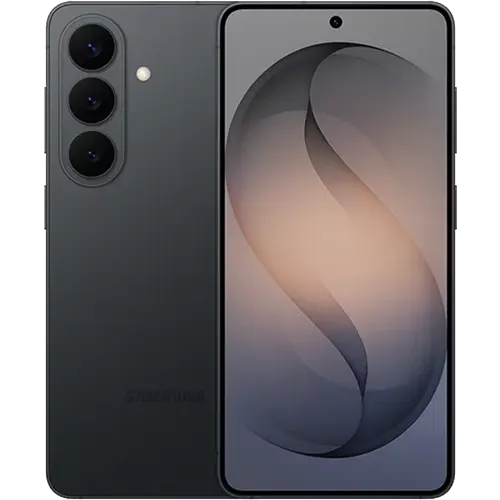
Galaxy S26
Samsung
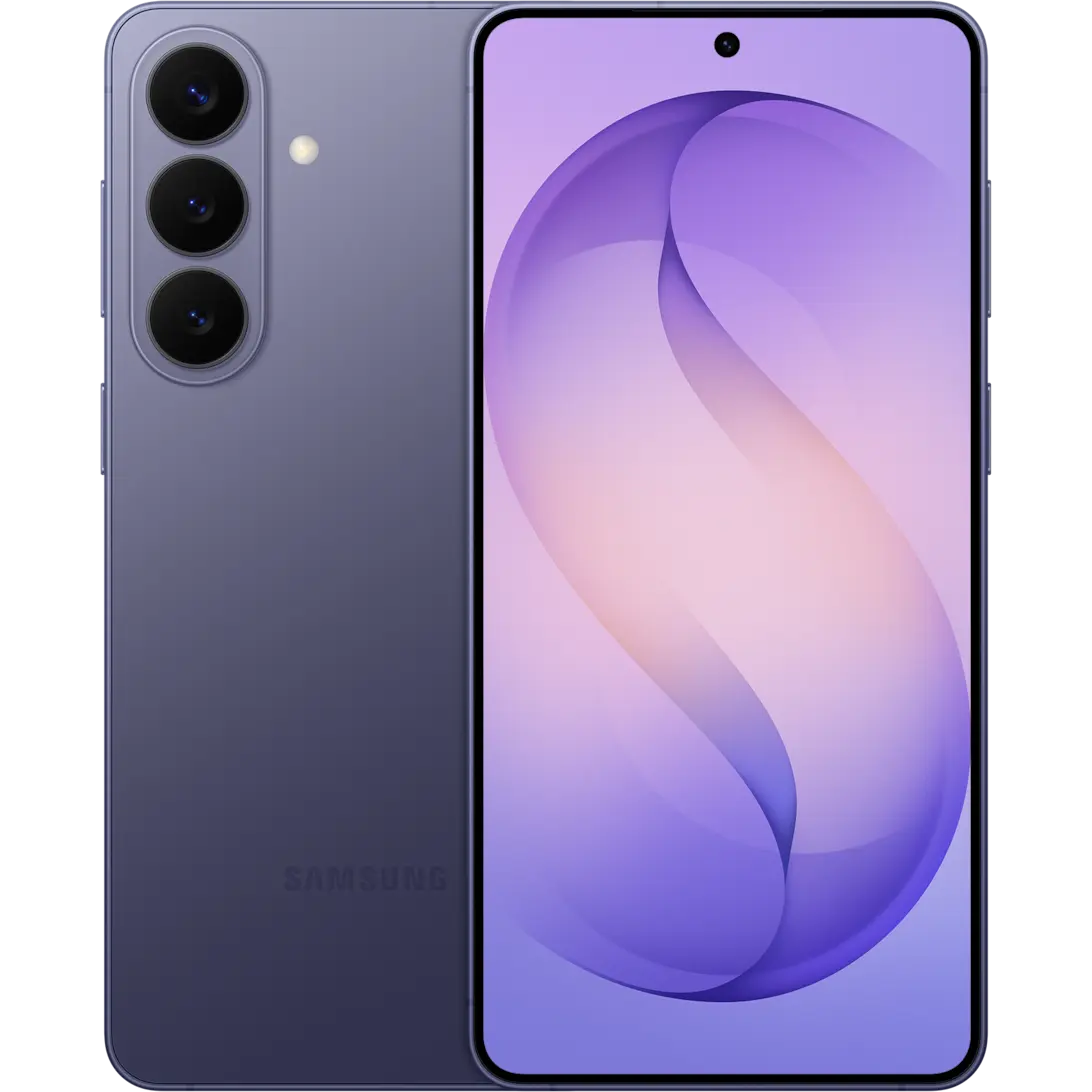
Galaxy S26+
Samsung
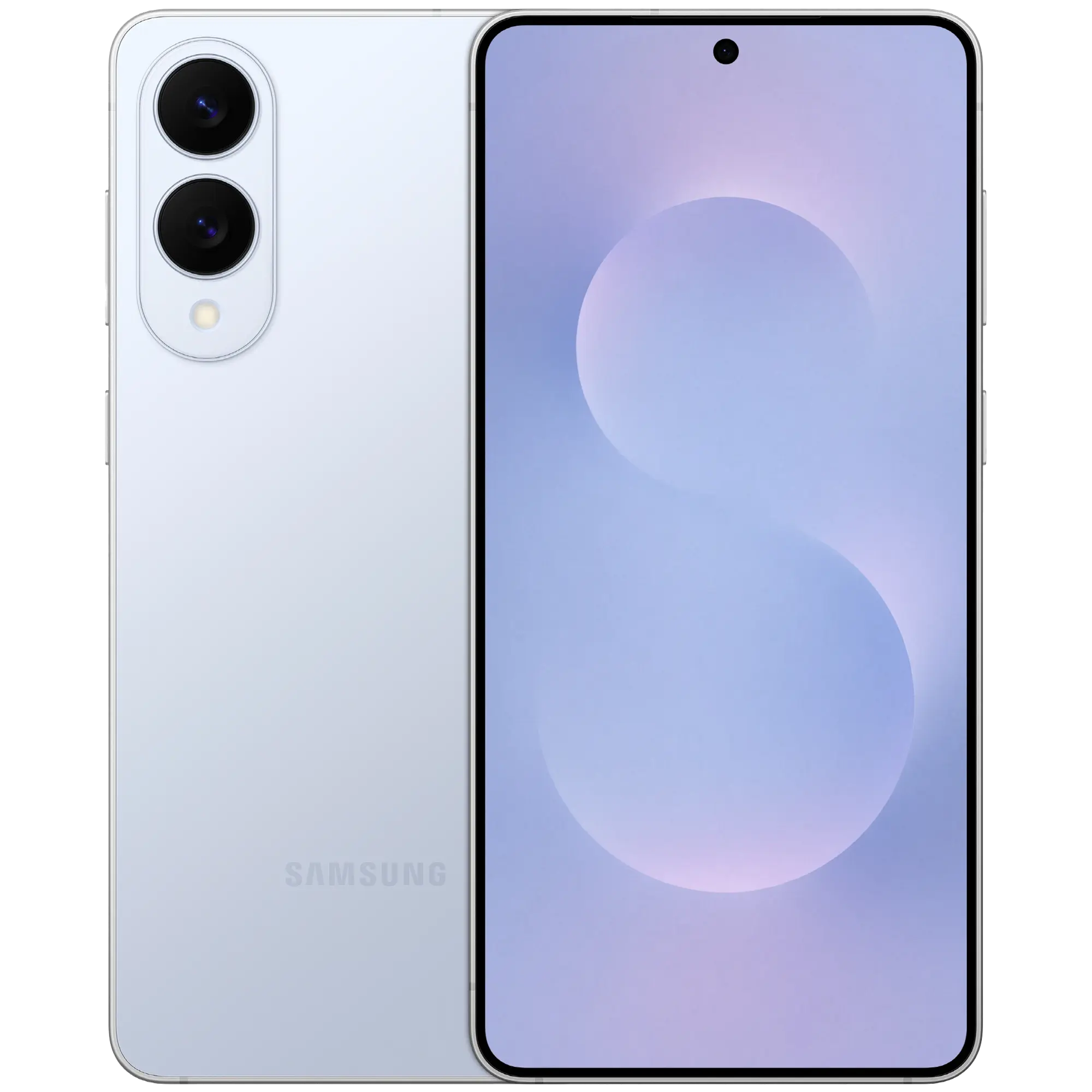
Galaxy S25 Edge

Samsung
Galaxy Z Flip 7
Samsung
Galaxy Z Fold 7
OnePlus
15
OnePlus
13

OnePlus
15R
Apple
iPhone 17
Xiaomi
15T Pro
Nothing