OnePlus
13
Ranked #11 of 42 devices tested
Score Overview
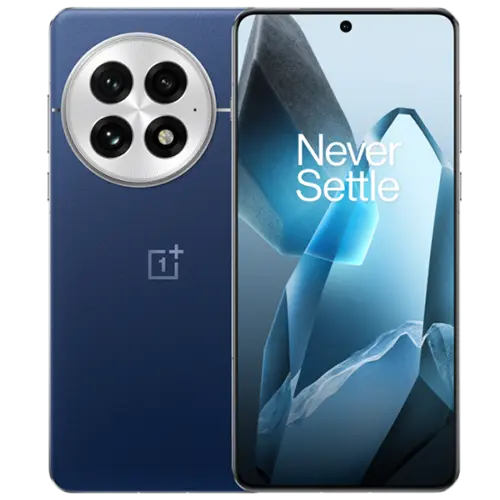
The OnePlus 13 is a flagship-priced Android phone aimed at buyers who want top-tier specs without crossing the $1,000 threshold. It has been replaced by newer devices like the OnePlus 15.
The phone's strongest showing is in battery life and charging speed, where the 6,000mAh cell and 100W wired charging put it well ahead of most rivals. The camera system is solid across all four lenses, with particularly good color accuracy on the telephoto and strong dynamic range from the main sensor. Performance is capable but not class-leading for a Snapdragon 8 Elite device. The display is adequate but unremarkable in brightness and color accuracy compared to the best panels at this price. The speaker and microphone are the phone's weakest points, falling behind essentially every competitor we've tested.
Design
Specifications
The OnePlus 13 measures 162.9 x 76.5 x 8.5mm and weighs 210g. It uses an aluminum frame, Ceramic Guard Glass on the front, and either glass or vegan leather on the back depending on the color variant. It carries an IP68/IP69 rating, meaning it's submersible to the standard IP68 depth and also resistant to high-pressure, high-temperature water jets.
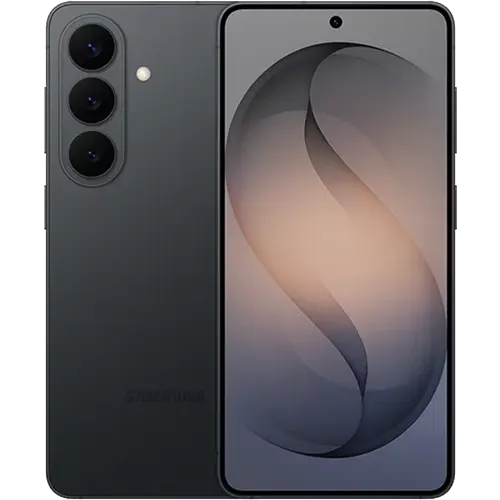
At 210 grams, the phone is heavier than the Samsung Galaxy S26 (167g) and slightly heavier than the iPhone 17 Pro (206g), though it also has a substantially larger 6.7-inch display and a bigger battery. The 87.5% screen-to-body ratio with a 19.8:9 aspect ratio means the bezels are visible but not unusually thick. The phone is a full centimeter taller and nearly 5mm wider than the Galaxy S26, which will matter for one-handed use.
Bandicoot Lab does not formally test design or durability.
Display
The OnePlus 13 has a 6.7-inch LTPO AMOLED display running at 1440 x 3168 resolution (510 PPI) with an adaptive refresh rate from 1Hz to 120Hz. It offers three color modes: Pro, Vivid, and Natural.
Manual brightness tops out at about 785 nits, noticeably lower than the Google Pixel 10 Pro's 1,450 nits and the iPhone 17 Pro's 885 nits. In direct sunlight, that gap will be visible. The minimum brightness drops to 1.58 nits, which is fine for dark rooms.
HDR peak brightness reaches 1,638 nits, well below the Pixel 10 Pro (3,428 nits) and iPhone 17 Pro (3,043 nits). The OnePlus 13 holds its HDR brightness exceptionally well over sustained use, maintaining 98.5% stability over 30 minutes. The iPhone 17 Pro drops to just 35% of its peak under the same load. High peak brightness that collapses under sustained use is less useful than moderate brightness that holds steady, and the OnePlus 13 delivers the latter.
Color accuracy is best in Pro mode, which targets sRGB and achieves an average Delta E of 2.23. Delta E measures how far displayed colors deviate from their reference values — anything under 2.0 is generally considered imperceptible, so the OnePlus 13 is close but not quite there. The Vivid mode covers 97.7% of the Display P3 gamut (the wide color space used by most HDR content) with an average Delta E of 3.36, meaning colors are slightly pushed but not dramatically off. The iPhone 17 Pro's Standard mode achieves an average Delta E of 0.85, which is substantially more accurate. The Pixel 10 Pro's Natural mode hits 1.35.
Touch latency averages 18.6ms, which is responsive and adequate for all uses. The Pixel 10 Pro is faster at 11.6ms, though the difference between them is unlikely to be perceptible.
Display Gamut Coverage
Sustained Brightness
HDR Brightness
HDR Tone Mapping
Performance
The OnePlus 13 runs on the Qualcomm Snapdragon 8 Elite with 12GB or 16GB of RAM and 256GB or 512GB of storage.
In Geekbench 6, the phone scores 2,993 single-core and 9,362 multi-core. That's behind the Samsung Galaxy S26 and the iPhone 17 Pro, both of which use newer processors. In GPU testing with 3DMark Wild Life Extreme, the OnePlus 13 peaks at 6,650 and settles to 4,342 at its worst loop, giving 65.3% stability. The peak score is strong — higher than the iPhone 17 Pro's 5,865 and well above the Pixel 10 Pro's 3,286 — but thermal throttling brings it down over sustained loads. The Galaxy S26 peaks even higher at 7,740 but throttles more aggressively to 45.8% stability. In the newer Solar Bay ray-tracing benchmark, the OnePlus 13 scores 11,958 at peak with 63.8% stability.
Browser performance via Speedometer comes in at 25, behind the Galaxy S26's 36.7 and the iPhone 17 Pro's 43.1. Web-heavy tasks will feel snappier on those devices.
Performance Benchmarks
Bars positioned relative to the best score in our database.
Wild Life Extreme Stress Test
Camera
The OnePlus 13 carries a 50-megapixel main camera, a 50-megapixel ultrawide, a 50-megapixel 3x telephoto, and a 32-megapixel front camera. It supports up to 120x digital zoom.
The overall camera system performs well, with the telephoto being a standout for color accuracy and dynamic range. The main sensor delivers strong dynamic range and decent sharpness in good light. The ultrawide produces some of the sharpest results across the system. The front camera is average.
Sharpness holds up well at native focal lengths but degrades faster than some competitors at deeper zoom levels. At 30x, the OnePlus 13 still resolves reasonable detail in bright light, but by 50x and beyond, detail drops substantially. At the maximum 120x zoom, images are heavily processed and soft. For comparison, the Pixel 10 Pro, with its 5x optical telephoto, maintains more consistent sharpness through the mid-zoom range (30x–60x), though it also falls off at extreme distances. The iPhone 17 Pro's 4x telephoto delivers sharper results at its native zoom but maxes out at 40x, so there's no direct comparison at longer reach.
Camera Sharpness
Main
The main sensor resolves good detail in bright and mid-light conditions, though it falls slightly behind the sharper output from the iPhone 17 Pro and Pixel 10 Pro at 1x. In low light, sharpness remains usable.
Color accuracy on the main lens is competitive. In bright light, colors are slightly oversaturated (around 105%) with minimal hue shift, giving images a subtly punchy look without straying far from reality. In mid and dark conditions, saturation drops closer to neutral. Hue accuracy remains relatively stable across lighting conditions, which is a strength. The color bias is essentially neutral in bright light and shifts only slightly warm in darker conditions, suggesting good white balance correction. The iPhone 17 Pro pushes saturation much harder (around 128% in bright light) and shifts color warmth significantly under indoor lighting.
Dynamic range is a strong point. The main sensor's processed images preserve good detail in both shadows and highlights, with moderate tone compression that keeps high-contrast scenes looking natural rather than flat. Highlights do clip in very bright areas, but the overall usable range is wider than the iPhone 17 Pro's main sensor and comparable to the Galaxy S26's.
Color Profile
Dynamic Range
Ultrawide
The ultrawide lens resolves strong detail across lighting conditions, and its output is competitive with the iPhone 17 Pro's and Pixel 10 Pro's ultrawide lenses.
Color accuracy is weaker here than on the main lens. In bright light, colors are close to neutral in saturation but carry a slight cool bias. In mid and low light, skin tones shift noticeably warmer and colors drift further from their reference values. The hue shift is moderate across conditions.
Dynamic range on the ultrawide is narrower than the main sensor, with highlights clipping earlier in bright scenes. This is typical for ultrawide lenses with smaller sensors. The Galaxy S26's ultrawide handles dynamic range similarly.
Color Profile
Dynamic Range
Telephoto
The 3x telephoto uses a relatively large 1/1.95" sensor and resolves solid detail at its native focal length. Color accuracy is the best of any lens on this phone. In bright light, the telephoto achieves an average Delta E of 10.24 in auto mode, which sounds high but is actually competitive for a processed smartphone image. Hue accuracy stays tight across conditions, and the saturation boost is restrained.
The telephoto shows a slight warm shift in mid and dark conditions, consistent with incomplete white balance correction for the warmer test lighting rather than a sensor limitation, as hue accuracy doesn't degrade proportionally.
Dynamic range is strong, with well-preserved shadow detail and highlight clipping only in extreme brightness. Video stabilization on the telephoto is notably good, producing the steadiest handheld footage of any lens on the phone.
Color Profile
Dynamic Range
Front
The 32-megapixel front camera produces average sharpness. Detail in bright light is acceptable but falls behind the iPhone 17 Pro's front camera by a wide margin. In low light, sharpness drops further.
Colors from the front camera carry a noticeable cool shift across all lighting conditions, which can make skin tones appear cooler than they looked in person. Saturation runs slightly high in mid-light (around 114%). Dynamic range is actually a strength of the front camera, preserving good detail in both highlights and shadows in processed images.
Color Profile
Dynamic Range
Battery
The OnePlus 13's 6,000mAh battery delivers roughly 29 hours and 26 minutes of continuous video playback at 200 nits, or about 22 hours at maximum brightness. That's a substantial lead over the iPhone 17 Pro (24 hours at 200 nits) and the Pixel 10 Pro (about 21 hours and 50 minutes). The Galaxy S26 edges it out slightly at just over 30 hours, but that phone has a much smaller display and lower resolution.
Web browsing drain over 5 hours was 24%, identical to the Galaxy S26. The Pixel 10 Pro drained 23% and the iPhone 17 Pro just 17% over the same period. Gaming drain during the 3DMark stress test was 34%, which is higher than the iPhone 17 Pro's 24% and the Galaxy S26's 27%. The Snapdragon 8 Elite's GPU draws significant power under sustained load, which partially offsets the battery size advantage during heavy gaming.
Standby drain is excellent at 1% over 8 hours overnight. The iPhone 17 Pro and Galaxy S26 both drain 2% over the same period.
In practical terms, most users will comfortably get through a full day of mixed use and likely well into a second day with lighter usage.
Battery Life
Charging
The OnePlus 13 supports 100W wired charging and 50W wireless charging.
Wired charging reaches 39% in 10 minutes and 91% in 30 minutes. That's very fast, especially for a 6,000mAh battery. The Galaxy S26, with its 25W charger and smaller 4,300mAh battery, only reaches 21% in 10 minutes and 58% in 30 minutes. The iPhone 17 Pro hits 31% and 72% over the same intervals.
Wireless charging is slower, hitting 9% in 10 minutes and 34% in 30 minutes. The iPhone 17 Pro reaches 24% and 49% wirelessly over the same periods, partly because its battery is much smaller. The Pixel 10 Pro reaches 12% and 34% with its 15W wireless charging, but again on a smaller battery.
The wired charging speed is a genuine practical advantage. Going from empty to nearly full in 30 minutes means most users will rarely need to plan around charging.
Wired Charging Curve
Wireless Charging Curve
Speaker
The OnePlus 13's speaker reaches 75.6 dB at maximum volume, which is loud and on par with the iPhone 17 Pro (75.2 dB) and Pixel 10 Pro (75.6 dB). Volume is not the issue here.
Average total harmonic distortion is 8.2%, which is high. The iPhone 17 Pro comes in at 4.7% and the Galaxy S26 at 3.4%. At higher volumes, the OnePlus 13's audio becomes noticeably rougher.
The frequency character skews toward the upper register. Bass response is thin, lacking the fullness you'd get from the iPhone 17 Pro or Galaxy S26. High-frequency clarity is also limited, leaving the speaker sounding somewhat hollow. The speaker gets loud enough but lacks the tonal balance and cleanliness of similarly-priced competitors. For music or video content, headphones will be a noticeable upgrade.
Speaker Frequency Response
Microphone
The OnePlus 13's microphone has a standard deviation of 9.68 across its frequency response, which indicates a very uneven capture profile. For context, the Galaxy S26 measures 4.06 and the Pixel 10 Pro 4.5. This means the OnePlus 13 will emphasize some frequencies and suppress others more than those phones, resulting in less natural-sounding voice recordings and video audio. It is below average for this price range.
Microphone Frequency Response
Other
Measurements
Specifications
The OnePlus 13 uses an ultrasonic fingerprint sensor that unlocks in an average of 156ms. That's fast, and quicker than the Galaxy S26's 226ms and the Pixel 10 Pro's 249ms. The phone has no hardware-based face unlock.
Data transfer over USB-C 3.2 achieves read speeds up to 315 MB/s and write speeds up to 243 MB/s for large files, which is fast and comparable to the iPhone 17 Pro and Galaxy S26. Small file performance is middling.
Storage is available in 256GB and 512GB configurations.
Conclusion
The OnePlus 13 makes its strongest case through battery life and charging speed. Nearly 30 hours of video playback and a 10-to-91% wired charge in 30 minutes are practical, tangible advantages over the iPhone 17 Pro, Pixel 10 Pro, and Galaxy S26. The camera system is well-rounded, with a telephoto that punches above its weight on color accuracy and a main sensor with strong dynamic range. Performance is capable but trails the Galaxy S26 and iPhone 17 Pro in CPU tasks and browser speed. The display is functional but doesn't match the brightness or color accuracy of its competitors. The speaker and microphone are clear weak points that fall well below what other phones at this price deliver. For buyers who prioritize battery endurance and fast charging over audio quality and display brightness, the OnePlus 13 offers strong value at $899.
Related
OnePlus
15
OnePlus
15R
Xiaomi
17
Samsung
Galaxy S26
Apple
iPhone 17
Samsung
Galaxy S25
Xiaomi
15T Pro
Nothing
Phone (3)
Apple
iPhone Air
Pixel 10 Pro